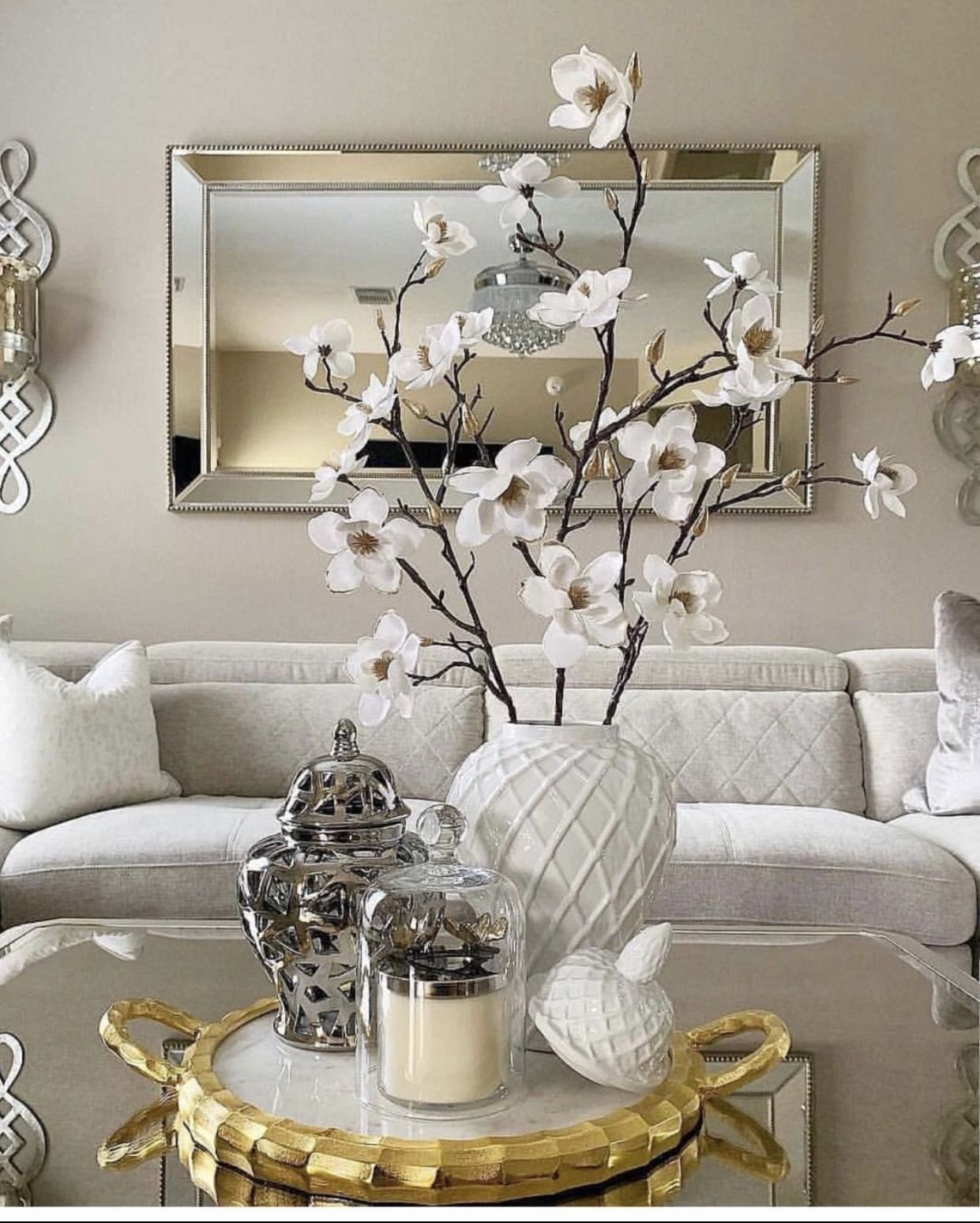
Level Up Your Living Room With These 33+ Coffee Table Ideas
Disclosure : This post may contain affiliate links or paid partnerships. I may earn compensation if you click a link or make a purchase, at no additional cost to you. See my disclosure for more info.
There is a version of your living room that you can already picture.
It is warm. It is styled. It looks like decisions were made there. Like the person who lives in it actually thought about what would go in which corner and why.
You have been putting off becoming that person.
The gap between the room you have and the room you picture is often a single piece of furniture. And that piece is almost always the coffee table.
It sits right at the center of everything. It is the piece your eyes land on first. It is the anchor that makes the rest of the room either work or fall short. Get it right and the whole room levels up with it.
Here are more than 33 coffee table ideas to get you there, plus the styling and sizing knowledge to make the most of whichever one you choose.
Classic Picks That Never Go Out of Style
Every design trend has an expiration date. These do not. If you want a coffee table that is still going to look right in a decade, these are your most reliable starting points.
1. Solid wood rectangular table. Solid walnut, oak, or teak with clean lines and zero gimmicks. This is the coffee table that works in every room, at every stage of your design evolution. It is the benchmark for a reason.
2. Round marble-top table. White Carrara or green veined marble on a brass or matte black base. It has the rare quality of looking luxurious without trying. A round form in natural stone is simply hard to get wrong.
3. Mid-century modern table. Tapered legs. Slim profile. Geometry that is good enough to have been in continuous production since the 1950s. This style has been current for over seventy years. It will probably outlast whatever comes next.
4. Oval tulip-base table. A sculptural pedestal base and a gently curved top that works brilliantly with curved sectionals. Functional, beautiful, and singular enough to feel like a proper design choice.
5. Parsons-style coffee table. The power of the Parsons table is in its restraint. Completely flush construction, uniform throughout, available in finishes from raw wood to high-gloss lacquer. It earns its place in the room without competing for attention.
6. Traditional turned-leg table. If your ideal home feels warm, collected, and classic—think layered neutrals, natural fabrics, a few genuinely old things—a turned-leg table in a rich wood stain will feel perfectly and permanently at home.
Showstopper Tables for a Room Worth Showing Off
The rooms people photograph, remember, and talk about all have something in common.
There is one piece in them that takes a position. That makes a choice a safer room would not have made.
These are those pieces.
7. Live-edge wood slab table. No sander or template touched the edge of this wood. The form is exactly as the tree created it. That is the entire point. What you get is something completely irreplaceable—a piece of furniture that no factory could replicate.
8. Hammered brass drum table. A hammered brass cylinder that shifts from warm to golden to amber depending on the light. It has the rare quality of looking more beautiful the longer you live with it. The patina develops in your favor.
9. Black concrete table. Dense, assertive, and completely sure of what it is. The right room—minimal, architectural, confident—will make this table feel inevitable.
10. Sculptural travertine table. Ancient stone carved into contemporary forms. The irregular silhouettes and the natural variation in the travertine itself make each piece genuinely one of a kind. It looks as good in ten years as it does on day one.
11. Bold lacquered color table. High-gloss lacquer in a color that takes a side—deep navy, forest green, oxblood, amber—in an otherwise neutral room. It is a deliberate act of design. And it works.
12. Vintage steamer trunk. A well-chosen antique trunk carries genuine history into the room. The character is real, the hidden storage is generous, and nothing you buy new will ever have quite the same presence.
Smart Storage That Keeps Life Stylishly Organized
The version of your living room you are picturing does not have remotes and charging cables scattered across every surface.
That version requires a coffee table with somewhere for things to actually go. These deliver.
13. Lift-top coffee table. The moment you use a lift-top table for the first time, you understand why it exists. The surface rises to a comfortable working height. The compartment below manages everything you want out of sight. It is one of the genuinely useful innovations in living room furniture.
14. Coffee table with drawers. Drawers solve clutter at the source. Remotes, coasters, cables, pens—they have a home now. The surface stays clear. The room looks like you intended it to look.
15. Open-shelf coffee table. The lower shelf is what separates a functional coffee table from a merely decorative one. Books, baskets, plants—they have a designated home, and the tabletop stays uncluttered.
16. Basket coffee table. The genius of a storage basket coffee table is that the solution and the style are the same object. Blankets live inside. The woven exterior looks intentional and warm. Zero compromise.
17. Ottoman with a tray on top. One piece, three jobs: a place for your feet at the end of a long day, storage for all the extras, and a tray-topped surface for drinks and styling. This is the living room overachiever.
18. Apothecary-style table with small drawers. The visual grid of small drawers adds depth and interest to the table itself, while solving the universal problem of small household items that have nowhere to live.
Small Space, Big Personality
A small living room is not a limitation. It is a constraint that makes you more thoughtful about every choice.
And thoughtful choices produce better rooms. These coffee tables were chosen for rooms where every square foot matters.
19. Nesting tables. When you need them together, they form a proper coffee table arrangement. When you need space—for guests, for movement, for breathing room—they separate effortlessly. No other table type offers that kind of adaptability.
20. Narrow oval coffee table. The slim oval gives you a real usable surface and a genuinely beautiful piece of furniture without taking over a small room. The smooth rounded ends keep the space feeling easy and open.
21. Acrylic or lucite table. The table is almost invisible. And that is a superpower in a small room. All the function, none of the visual mass. The space immediately reads as larger and more open.
22. C-shaped slide-under table. This one slides right under the sofa arm or cushion overhang. No floor footprint whatsoever. In a studio apartment or tightly configured living room, that is not a small thing.
23. A slim console used as a coffee table. Think outside the furniture category. A narrow console positioned in front of the sofa delivers everything a coffee table does in a profile that takes up half the floor depth.
Conversation-Starting Materials From Around the World
Some materials do the talking for you.
You do not need to explain them or call attention to them. Guests will find them on their own, reach out to touch them, and ask the question themselves. These are those materials.
24. Petrified wood. Ancient wood, mineralized over millions of years into stone. Each slab records a specific moment in geological time. It is one of the few tabletop materials that is genuinely irreplaceable—there is no manufacturing equivalent.
25. Terrazzo. A material with origins in fifteenth-century Venice, still in production because it is beautiful, durable, and impossible to exactly replicate. The aggregate composition means every piece is slightly different from every other.
26. Rattan or woven cane. Woven rattan brings texture, lightness, and a warmth that heavier materials cannot match. In coastal, bohemian, or Scandinavian-influenced rooms especially, it feels completely at home.
27. Smoked glass with blackened steel. Dark tinted glass and blackened metal in combination produce a surface that is simultaneously precise and moody. In the right room—minimal, cool, confident—it looks exactly right.
28. Hand-poured resin. Every casting is unique. The fluid suspended in solid form—whether it mimics ocean water, agate stone, or abstract art—is a statement that no catalogue piece can duplicate.
29. Ceramic or hand-plastered. These pieces carry the evidence of the hands that made them. The slight irregularities, the quality of the matte surface, the organic form—it is all there. That authenticity is what the room needs.
Layouts That Break the Rules in the Best Way
The single rectangular coffee table, centered in front of the sofa. This is the default. It is not always the best option.
Here are the alternatives that designers actually use.
30. Two matching side tables pushed together. One large surface when you want it. Two mobile, independent pieces when you do not. The flexibility this provides is something a single fixed table simply cannot offer.
31. A cluster of three small stools. Group them as a coffee table arrangement. Separate them as extra seating when the room needs it. One set of pieces, two distinct functions, zero waste.
32. A thick butcher block slab on hairpin legs. Custom dimensions, DIY construction, exceptional result. This one costs less than most options in this guide and looks more intentional than most of them too.
33. A garden stool as a mini coffee table. One of the best-kept styling secrets: a beautiful glazed ceramic garden stool brought indoors as a side or coffee table. Affordable, durable, available in dozens of finishes, and completely at home in a well-designed living room.
Coffee Table Styling Secrets the Pros Use
Here is the version of events nobody shows you.
The designer places the table. Then they spend another twenty minutes on top of it. Because the table is only the beginning. What goes on the table is what makes the room feel finished.
These are the principles that make it work.
The tray is not optional. A decorative tray placed on the surface creates a frame. Everything inside that frame is a composition. Everything outside it is visual noise. One tray transforms the surface from “things on a table” to “an intentional arrangement.”
Three objects always work. Odd numbers create dynamic tension. Three items of different heights consistently produce the most satisfying arrangements. A candle, a small sculptural plant, and a stack of oversized books. Start exactly there.
Include something that is alive. A vase with a fresh stem, a trailing plant, dried botanicals. Nothing manufactured fully replicates what an organic element does for a surface—it makes the space feel inhabited rather than installed.
Stacked books change the game. Two large-format books laid flat become a platform. A small decorative object placed on top creates height variation and dimensionality that no flat arrangement can achieve.
Honor the empty space. Negative space is not absence—it is composition. The uncovered surface area around your arrangement is what makes the arrangement visible as a deliberate choice. Do not fill every inch.
The Sizing Formula That Makes Everything Look Right
You can choose the most beautiful coffee table in the world. If the sizing is wrong, the room will not work. These four numbers are the difference between right and wrong.
Height: match the cushion or go just below. The table surface should align with your sofa cushion height or sit one to two inches lower. A table that rises above the cushions creates a visual imbalance that will bother you every time you sit down, even if you cannot immediately name why.
Length: target two-thirds of the sofa. This is the proportion that makes the table look like it belongs to the sofa rather than visiting it. Too long and it dominates. Too short and it floats.
Clearance: 14 to 18 inches between table and sofa. This range allows comfortable movement around the table and easy reach from any seat without leaning forward awkwardly. It is the functional sweet spot that every well-designed living room maintains.
Shape: follow the furniture logic. Sectionals are naturally served by round or square tables that fill the interior corner. Linear sofas read best with rectangular or oval tables that echo their own directionality.
One final thing.
Your coffee table should not match your side tables. This is not a constraint—it is a design principle. Mixing materials intentionally—warm wood with brushed steel, natural stone with woven rattan—creates the layered, collected look that makes a room feel designed rather than decorated.
Looking Expensive Without Spending a Fortune
Let’s talk about what actually determines whether a coffee table looks good.
It is not the price.
It is the fit. A correctly proportioned table at any budget will outperform a beautiful but oversized or understyled table at any price. The variables that drive outcome are: the right dimensions for the sofa, a material that suits the reality of how the household lives, a shape that works with the existing furniture layout, and a style that has coherence with the rest of the room.
Get those four things right and the table looks expensive even if it was not. Get them wrong and an expensive table will always look slightly off.
Your Living Room’s Glow-Up Starts Now
You have 33+ options. You have the styling principles. You have the sizing formula. You have more than enough information to make a genuinely good decision.
The only thing standing between you and the living room you have been picturing is actually making the choice.
Not scrolling a little longer. Not saving this for later. Not waiting until the “right time.”
The right time is now. Pick the table that fits your room. Bring it home. Style it properly.
The glow-up is closer than you think. Go get it.