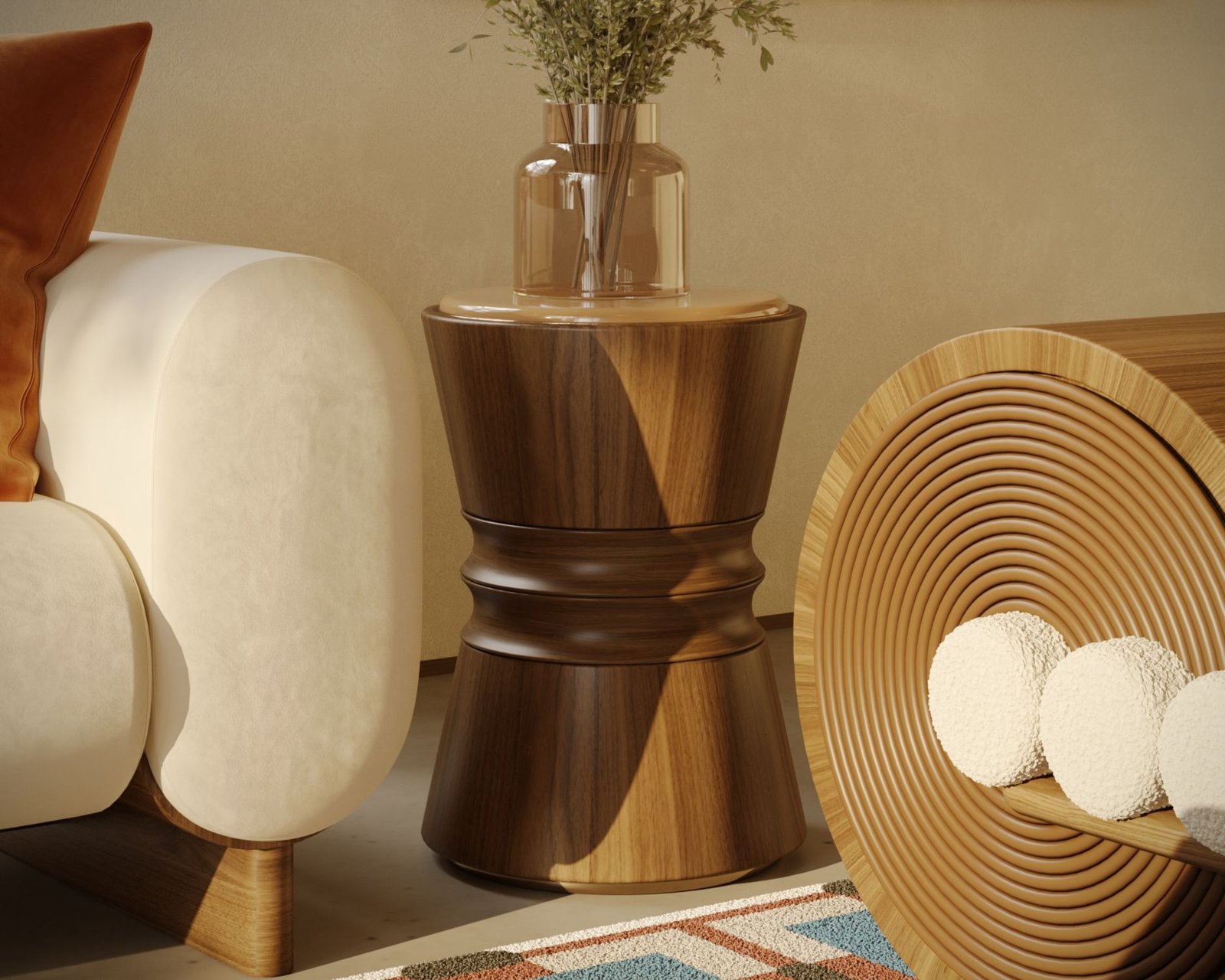
27 Honest Side Table Tricks That Actually Work in Real Living Rooms
Disclosure : This post may contain affiliate links or paid partnerships. I may earn compensation if you click a link or make a purchase, at no additional cost to you. See my disclosure for more info.
Let’s skip the aspirational part and just be honest with each other.
Your side table is not going to look like something from a design magazine. Your living room is not a photoshoot. You have a real home where real life happens, and that means your side table is also going to be used as a charging station, a book landing zone, and a temporary resting place for things that have nowhere better to be.
That’s fine.
What this list gives you is not magazine-perfect styling. It’s honest, practical advice for making your side table look significantly better than it currently does — without pretending you live in a different kind of home than you actually do.
These 27 tricks work in real living rooms. With real budgets. Alongside real life.
No drama. Just results.
Honest Foundations: Where to Actually Start
1. Clear it off. Yes, all of it. Even the stuff that “belongs” there.
This is uncomfortable advice because half of what’s on your side table probably does feel like it belongs there.
The remote. The lip balm. The book you’re currently reading. The coaster you always use. Take it all off anyway. Look at the empty surface. That’s your starting point. The remote can come back later — but only if you decide it belongs there, not because it drifted there on its own.
2. Group three things together. The rule of three is not a myth.
You’ve probably heard this before. It’s repeated because it’s genuinely, reliably true.
Three objects of different heights grouped together look intentional. Two looks like you couldn’t decide. Four starts getting crowded. Seven is a mess. Three is the working number, and it applies to every table, every room, every style. Trust it.
3. Vary the heights. No, really — it matters more than you think.
Everything at the same height is the most common side table mistake. It’s also the easiest to fix.
Stack two or three books you already own and put something small on top. That’s your tall element. Your lamp handles the medium height. Something flat and small handles the low. It costs nothing, takes two minutes, and the difference is immediately visible.
4. Choose one thing you actually like and make it the star.
Not the most expensive thing. Not the thing you think looks the most “design-y.” The thing you actually like.
A sculptural vase you’ve always been fond of. A bold lamp with a base that makes you happy. A striking clock that has actual meaning to you. Lead with genuine preference. When the hero piece is something you really like, the whole arrangement feels more honest — because it is.
Lighting: The Honest Truth About What Works
5. Get a table lamp on that surface. It genuinely changes everything.
This is not hyperbole. A warm table lamp on your side table is probably the single most impactful change you can make to your living room tonight.
Not because it looks good (though it does). Because it changes how the room feels. Overhead lighting makes spaces feel institutional. Lamp lighting at the right height makes them feel human. Your living room deserves to feel human. Put a lamp on the side table.
6. Cords are a real problem. Here’s the honest fix.
Visible power cords genuinely undermine a styling setup. That’s just true.
The easiest solution is a cordless LED lamp — no cord, no outlet required. The slightly cheaper solution is managing the existing cord by positioning the lamp so the cord runs along the back of the table and is hidden from the room’s main viewing angle. Either works. What doesn’t work is leaving a visible cable snaking across the surface and pretending it’s fine.
7. A candle beside the lamp makes the room feel better. Full stop.
Not because it’s trending. Not because design accounts say so.
Because a candle burning softly beside a lamp produces a quality of warm, layered light that makes people actually feel more comfortable in a room. Every person who has ever sat in that kind of light has felt it. You know what it feels like. That’s why it belongs on your side table.
Stacking and Layering: What Actually Works at Home
8. Use a stack of real books, not decorative props.
Stack two or three books you actually own and care about. Put something small on top.
The books don’t have to be expensive coffee table editions. They can be the novels you’ve loved or the titles that reflect who you actually are. A stack of meaningful books topped with a small object is more honest — and more interesting — than a stack of props chosen for their spines. And it works just as well structurally.
9. Deal with the spine issue honestly.
Some of your book spines will clash with your room. That’s fine. Here’s what to do.
Turn the worst offenders around so the pages face out. It creates a neutral, uniform look that works in any room. Or choose your stack from books whose spines genuinely complement the colors around them. Either approach works. The thing to avoid is pretending a neon-yellow spine in the middle of a calm arrangement isn’t causing a problem.
10. A small tray under your objects will make them look intentional immediately.
This is the styling shortcut with the highest honest return on investment.
A tray creates a visual container that makes a group of objects look like a deliberate arrangement. Without it, the same objects look like things you put there. With it, they look like things you chose to display. The psychological difference is real and immediate. If you only buy one thing for your side table, let it be a tray.
Plants: The Honest Conversation
11. Add a plant. But be honest about which plants you can actually keep alive.
A small potted plant on a side table adds genuine life, organic texture, and natural color that nothing else provides. This is true.
Also true: a dead or dying plant on a side table is worse than no plant. Be honest with yourself about your plant-keeping track record. If you kill things, go with a succulent in a bud vase or a pothos cutting in water — they survive genuine neglect. The goal is a living plant, not a guilt-inducing one.
12. Dried botanicals are not a cop-out. They’re a legitimate choice.
If keeping plants alive is not your thing, stop apologizing for it and use dried botanicals instead.
Dried eucalyptus, pampas grass, dried lavender — these look genuinely good, last for months, and require nothing from you. They are not the “easy option” in a condescending sense. They are a valid aesthetic choice that works beautifully in most rooms. Use them without apology.
13. Driftwood and branches: stranger than they sound, better than they look in photos.
This suggestion raises eyebrows until people actually try it.
A smooth piece of driftwood or an interesting branch, placed on a side table with deliberate casualness, adds an organic, natural quality that purchased objects struggle to replicate. It’s free to find. It’s distinctive. And it gives your table a quality that design-minded guests will notice — something genuine, something found, something that wasn’t bought.
Mixing Materials Without Overthinking It
14. Mix two materials you already own that are clearly different.
You don’t need a design background to do this. You need two objects that feel different from each other.
A ceramic vase that’s smooth and a brass candle holder that’s metallic. A glass object next to a woven basket. Hard next to soft. Smooth next to rough. Cold next to warm. Any combination of genuinely different materials will create more visual interest than five objects made of the same thing.
15. Add something soft. It makes a harder arrangement feel warmer.
Hard surfaces are visually cool. A single soft element changes that.
A woven coaster under a vase. A folded linen cloth under a lamp. A macramé plant hanger draped near the edge. One soft thing in an arrangement of hard objects makes the whole surface feel more approachable, more comfortable, more human. It takes thirty seconds to add and you probably already own something that will do the job.
16. One metallic thing. It works. Use it once.
One metallic object on a side table catches light and lifts the whole arrangement.
A brass picture frame. A brass bowl. A copper something-or-other. One. If you use more than one metallic piece, they compete with each other and neither works as well. The “one metallic element” rule is honest advice grounded in how the eye actually responds to reflective surfaces. Follow it.
Personal Objects: The Honest Argument for Meaning
17. Put something real on the table. Something that actually means something to you.
This is the advice that separates a side table that looks styled from one that feels lived in.
A stone from somewhere you loved. An object with a real story. Something that belongs to your actual life rather than a catalog idea of it. That one personal object makes the table honest. And honest tables in honest homes are more interesting than perfect ones every time.
18. Lean a frame against the wall. Don’t overthink it.
A 4×6 or 5×7 framed print leaned against the wall behind your side table. That’s the whole instruction.
It adds depth, personality, and a gallery quality that takes five seconds to achieve. It requires no tools, no commitment, and no skill. If you own a framed photo or print anywhere in your home, you can do this right now. The “leaned” look is more appealing than the “perfectly hung” look on a side table in most rooms. Try it.
19. Accept that your table will catch everyday objects. Design for it.
Rings are going to end up on your side table. So are reading glasses, a lip balm, probably a hair tie.
Stop fighting this. Instead, put a beautiful small dish there — a ceramic one, a marble one, anything with some visual quality — and let it be the official landing zone. Now the everyday objects have a home. The clutter becomes contained and intentional. Real life integrated into real design.
Scale, Space, and the Honest Proportions
20. Leave empty space. Seriously. More than you think is necessary.
The impulse to fill a surface is strong. Resist it every time.
Empty space is not wasted space. It is the thing that makes the objects you have chosen look deliberate rather than accumulated. Leave at minimum a third of the surface bare. If the table looks too sparse to you, it probably looks exactly right to everyone else. Trust the open space.
21. Scale your objects to the actual table you have.
Not the table you wish you had. Not the one in the inspiration photo. The one you actually own.
A small table calls for smaller objects. A large table can handle larger ones. When scale is wrong, the arrangement looks wrong and no amount of other good choices will fix it. Stand back and look honestly at whether your objects suit the surface they’re on. Adjust if they don’t.
22. The lamp shade height rule exists because top-heavy tables look bad. Follow it.
Nothing taller than 1.5 times the height of the lamp shade.
This rule isn’t arbitrary — it prevents arrangements from looking like they might fall over, which creates a subtle but real unease in anyone who looks at them. Once you’ve seen a well-proportioned arrangement and a top-heavy one side by side, you’ll never need this explained again. The rule saves you from finding out the hard way.
The Finishing Touches You’ll Actually Use
23. Add a scent element because it makes the room feel better in an honest, physiological way.
Not because it’s on-trend. Not because design influencers say so.
A scented candle or a reed diffuser makes people feel more comfortable in your living room — research confirms this. The olfactory system connects directly to the emotional centers of the brain in a way that bypasses conscious thought. Your guests will feel more at ease before they know why. The investment is minimal. The effect is real.
24. Swap one thing per season. Just one. That’s genuinely all you need.
You don’t need to restyle for each season. You don’t need a seasonal decor budget.
Change one object four times a year. A candle with a different scent. A stem in a different vase. Something you found outside that speaks to the current season. That single annual rotation of four objects is enough to keep your living room feeling current and engaged with the actual world outside the window.
25. Elevate one piece slightly. It works and here’s why.
Height implies importance. That’s how human perception works across virtually every culture.
A marble coaster beneath one key object — a candle, a vase, whatever the primary piece of the arrangement is — raises it slightly above everything else. The brain reads this as: this matters most. That small signal clarifies the hierarchy of the arrangement and makes the whole thing feel more considered. One inch. Outsized effect.
26. Edit once a month. Remove stuff. It’s that simple.
Once a month, look at your table honestly.
What has been there so long you’ve stopped seeing it? Remove it. What has crept back onto the surface through daily life? Remove that too. The monthly edit is the single habit that keeps a well-styled side table from gradually reverting to a cluttered one. Five minutes. Once a month. Remove before you add.
27. Check how it looks from across the room. That’s where people actually see it.
Every styling check happens up close. Every real-world viewing experience happens at distance.
Walk to the other side of your living room. Sit in the chair across from the table. Look from the doorway. Does it look good from there? Does it contribute to the room or compete with it? That honest, distance-checked view is the final test — and the most important one. If it passes from across the room, it passes.
The Honest Conclusion
Your side table doesn’t need to be perfect. It needs to be intentional.
Intentional means you decided what goes there. You considered the heights, the materials, the scale. You left some space empty on purpose. You included something personal. You checked from across the room.
Pick three techniques from this list that feel genuinely doable in your actual home, with your actual objects, tonight. Not the aspirational three. The realistic three.
The gap between a living room that looks assembled and one that looks considered isn’t money or expertise. It’s the willingness to be honest about what you’re looking at and deliberate about what you choose to put there.
Your side table is ready for that kind of honest attention.
And the next time someone sits across from it and says “This room feels so comfortable” — you’ll know it was 27 honest, practical choices that made them feel that way.