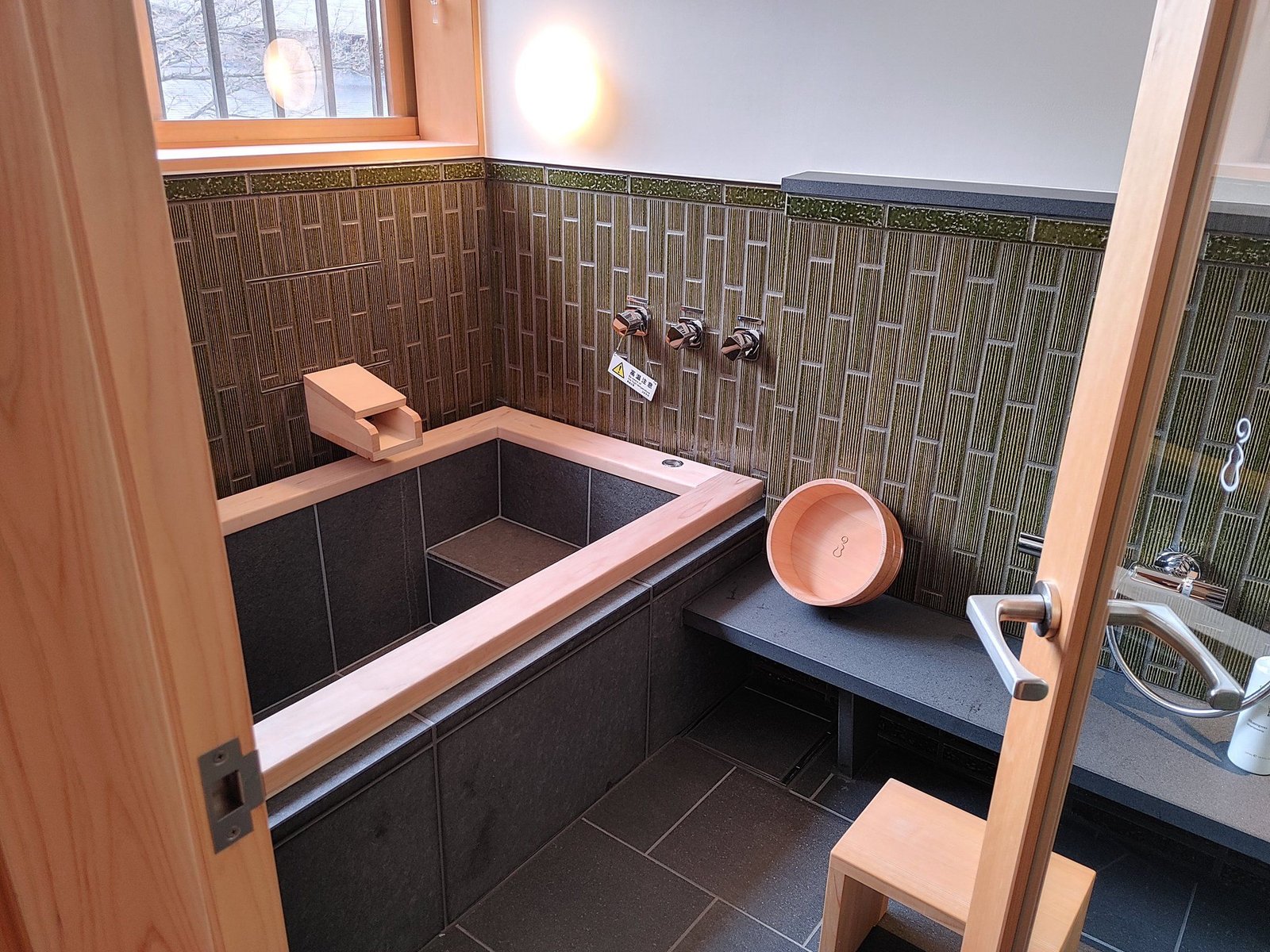
28 Japanese Bathroom Elements That Turn an Ordinary Room Into a Daily Reset
Disclosure : This post may contain affiliate links or paid partnerships. I may earn compensation if you click a link or make a purchase, at no additional cost to you. See my disclosure for more info.
You get home and you have nothing to spare.
Your body is carrying the day. Your mind hasn’t fully stopped since you started. Your notifications are still arriving.
You walk into your bathroom and feel… no change.
The room doesn’t meet you. It doesn’t ease anything. It just exists — neutral, unmemorable, passively unhelpful.
Now imagine the opposite.
A bathroom that does something for you the moment you step inside it. That visibly, physically, sensorially says: you can let go now.
That is not an imaginary room. It is the room that Japanese bathing culture has been designing for centuries.
And twenty-eight of its best ideas are right here.
Why Japanese Bathrooms Work
The short answer: intention.
In Japan, the bath is not something you get through. It is something you enter into.
Bathing is understood as renewal — physical and mental together. The space is designed to reinforce that understanding at every level: materials, spatial flow, light, sound, scent.
Every element is chosen because of what it does to the person inside the room.
That principle is completely transferable. And every one of the ideas below is grounded in it.
Layout Decisions That Make the Difference
1. Divide the bathing area from the changing area
In Japanese homes, these have always been separate zones. The bathing space is for water. The changing area is for staying dry.
A glass panel or a shallow step-down creates that distinction even in a compact bathroom. The immediate effect is a room that feels tidier and more purposefully organized.
2. Treat the soaking tub as the room’s only anchor
In Japanese design, the bathtub is not one element among many. It is the room’s entire justification.
Position your soaking tub where it dominates visually. Every other element in the room should frame it, not compete with it.
3. Create a rinse station separate from the soaking tub
The Japanese practice is to wash completely before entering the bath. The soaking water is kept perfectly clean throughout.
A low-level shower station with a handheld showerhead and a wooden bathing stool makes this possible even in modest bathrooms.
4. Give the toilet its own enclosed corner
A sliding screen, a half-wall, a pocket door — any of these will do.
Removing the toilet from the visual field of the bathing area changes the character of the room. It becomes a space designed for recovery, not just for function.
Materials That Communicate Calm
5. Bring hinoki cypress into your bathroom in any form
Hinoki is the material that defines Japanese bathing culture. Moisture-resistant and naturally mold-inhibiting, it was born for wet spaces.
What makes it irreplaceable is the fragrance it releases in steam — warm, woody, faintly citrusy, and completely impossible to replicate artificially.
A hinoki bath mat, a bathing stool, or a simple tray near the tub introduces this every time you bathe.
6. Cover the floor in natural stone
Pebble tiles, slate, or smooth river stones connect you to the earth beneath the building in the most direct possible way.
Walking barefoot on a pebbled shower floor is not just aesthetically beautiful. It is a reflexology practice embedded invisibly into your daily routine.
7. Select matte finishes as a default rule
Gloss reflects and amplifies. Matte absorbs and quiets.
On tiles, fixtures, countertops — a matte finish across all surfaces makes the room feel warmer, more intimate, and substantially more restful.
8. Echo washi paper through softly textured wall panels
You cannot install washi in a wet room. But panels that carry its layered, soft quality translate the feeling into the space.
A detail noticed subconsciously before consciously. Which is exactly the right kind.
Using Water as More Than Just Water
9. Make the deep ofuro tub your primary investment
Without this, the Japanese bathroom is an approximation at best.
The ofuro is deep and compact by design. You sit upright in it, immersed to the shoulders, surrounded by hot water that holds you rather than merely covers you.
It is a qualitatively different physical experience from a standard Western bath. A deep soaking tub is the single upgrade that changes everything.
10. Fit a ceiling-mounted rain showerhead
A rain showerhead mounted directly overhead delivers water as a wide, even, downward flow.
No pressure. No direction. Just water moving the way water naturally moves.
It transforms rinsing from a task into a two-minute meditation.
11. Install a handheld wand on a height-adjustable rail
A sliding rail system lets you set the showerhead at precisely the height you need — standing, sitting, or anywhere between.
Simple. Flexible. And aligned with the Japanese ethos of attentive, unhurried washing.
12. Add a small water feature for its sound alone
In Japanese culture, the gentle sound of moving water is as important to a space as its visual appearance.
A tabletop fountain near the tub adds a sonic layer of calm that no visual element can replicate. It speaks directly to the nervous system in a way that decorative objects do not.
Light That Works For You
13. Use warm, adjustable lighting only
Cool bright overhead lighting keeps you alert. That is incompatible with the purpose of a restorative bathroom.
Warm LED strips behind mirrors or beneath floating vanities, paired with a dimmer, let you set the room to the level your body actually needs.
14. Fit a backlit mirror for atmospheric illumination
A backlit mirror replaces the harsh directional light of standard vanity fixtures with a soft, surrounding glow.
The effect is immediate: the room feels intentionally lit rather than accidentally illuminated.
15. Layer in lantern or candle warmth
Japanese-style pendant lights or a row of candle holders at the tub edge add the specific quality of warmth that electric fixtures cannot produce alone.
Flicker communicates safety to the body. That is not aesthetics. That is physiology.
Minimalism With Purpose
16. Eliminate everything visible that doesn’t serve the experience
Surface clutter is a low-level stressor. You may not consciously register it, but your nervous system does.
Floating vanities with concealed storage, built-in shower niches, and recessed cabinets keep all your products accessible and entirely out of visual circulation.
17. Limit colors to an absolute minimum
Soft white. Natural stone. Pale timber. Warm grey.
No more than three tones. No patterns. No statement colors.
A constrained palette creates visual silence — the sensation that the room has space to breathe. Which is, in turn, the sensation that you have space to breathe inside it.
18. Display one object and give it room
One handmade ceramic piece. One considered soap dish. One flower.
“Ma” — the Japanese design concept of intentional emptiness — holds that the space around an object carries as much weight as the object itself. Emptiness is a material here.
19. Unify your towels in a single neutral shade
A bathroom with mismatched or multi-colored towels cannot feel calm regardless of how well-designed everything else is.
One color, one quality, arranged neatly on an open wooden shelf. The smallest possible change with an immediate and visible payoff.
Living Elements That Root the Space
20. Keep one living plant in the bathroom
Ferns, bamboo, peace lily, pothos — all of these actively thrive in bathroom humidity.
A single plant positioned near the tub grounds the room in the natural world without effort. This is the Japanese concept of “shizen” — beauty that exists as naturally as breathing.
21. Place a bamboo tray across the soaking tub
A bamboo bath tray carries tea, a book, a candle, or simply the intention to remain in the moment.
This is not about accumulating bath accessories. It is about creating a structure that makes stillness feel natural.
22. Design a visual anchor in the room
A window with frosted glass gives you natural light and privacy simultaneously. Let it in.
Without a window, a framed nature image — fog through a forest, a wide river, a still mountain — gives your gaze somewhere gentle to land when your thoughts finally go quiet.
The Sensory Finishing Layer
23. Mount a heated towel rack
The transition from warm soaking water to a warm towel is one of the most genuinely pleasurable experiences a bathroom can offer.
A wall-mounted heated towel rack delivers this every single bath, for years, at a modest upfront cost. Few upgrades offer this return on investment.
24. Tie botanical bundles near the showerhead
Fresh eucalyptus or cedar releases its essential oils in the steam. The bathroom fills with a natural fragrance that is genuinely soothing.
No devices needed. No synthetic ingredients. Heat and plants, doing exactly what they do.
25. Address the cold floor
Bare feet on cold tile the moment you step out of warm water is a physical jolt that dismantles the experience of a good bath instantly.
Radiant floor heating is the optimal solution. A quality wooden bath mat placed precisely where you step out is the immediate, accessible fix.
26. Actively design the acoustic environment
A waterproof Bluetooth speaker set to rainfall, shakuhachi flute, or gentle white noise actively shapes what you hear and how it makes you feel.
Most bathroom renovations are entirely visual. Sound is the hidden layer that carries relaxation in ways no tile or fixture can match.
27. Settle on a single, quiet fragrance for the space
Not a diffuser. Not a commercial spray.
A piece of hinoki wood in a ceramic bowl. One incense stick before bathing. A drop of pine or cedar essential oil dissolved in warm water.
Japan’s “kodo” tradition holds that fragrance is not decoration. It is a direct path to present-moment calm.
28. Keep a robe or yukata hanging on the door
Stepping from warm water into the cold air of a room without a robe breaks the experience completely.
A lightweight cotton or linen robe on a simple wooden hook extends the warmth of the bath seamlessly. The spell holds. The transition is gentle.
The Real Point of All of This
None of these twenty-eight ideas are really about design.
They are about building a room that gives you something real every day. A daily reset. A room that earns its place in your home by actively working on your behalf.
Japan has known this for a long time. The bath is not a routine. It is the most reliable form of daily restoration available to most people.
And you deserve a room that knows that about itself.
You do not need to do everything on this list today. Choose one idea. Apply it with care. Then let it become the starting point for the next.
Every intentional choice builds on the one before it. And every one of them is an investment in the person who walks into that room at the end of a hard day.
That person deserves better than a neutral, forgettable space.
Build them a good room. Start now.