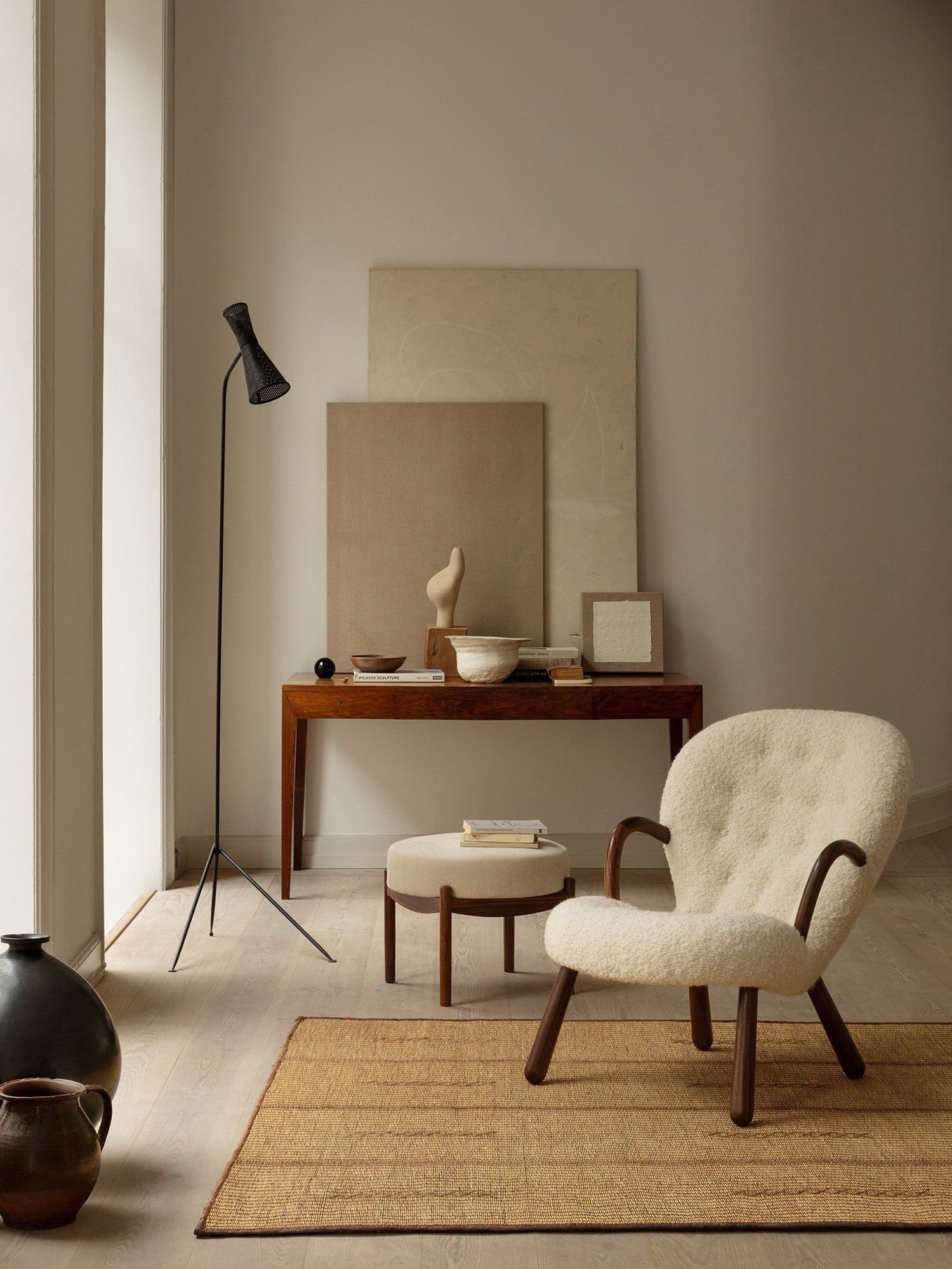
27 Chair Ideas That Will Completely Refresh Your Living Room’s Look and Feel
Disclosure : This post may contain affiliate links or paid partnerships. I may earn compensation if you click a link or make a purchase, at no additional cost to you. See my disclosure for more info.
Something has to change.
You walk into the living room and it still feels the same. Unchanged. Uninspired. Like a space that’s waiting for something to happen inside it.
You’ve thought about repainting. About new shelving. About replacing the sofa with something bigger or smaller or better upholstered.
But here’s the thing: most living room refreshes that actually work don’t start with the sofa. They start with the chairs.
Chairs are the room’s most flexible design element. They can be moved, swapped, rotated, restyled, paired differently. They shape how the room looks from every angle. They determine how people sit, move, and feel inside the space.
And in most living rooms, they’re the piece that received the least thought when the room was put together.
That’s actually good news. It means there’s more design potential sitting in your living room right now than you probably realize.
These twenty-seven ideas will help you find it and use it.
Form and Proportion: Rethinking What’s Already There
1. Map every chair’s footprint before making any changes.
Get the tape measure out. Know the actual dimensions of each chair and exactly how much space surrounds it.
Sometimes a room feels wrong not because of what’s in it but because of how what’s in it is scaled relative to the room. You can’t diagnose the scale problem without measuring first.
2. Break the rectangle pattern with one round or curved chair.
Most living rooms are a catalog of straight lines and right angles. Adding a single curved or barrel-back chair into that visual pattern gives the eye a different kind of shape to rest on.
The room feels warmer. More varied. More like it was put together by a person rather than a spreadsheet. One curve changes the energy of the whole composition.
3. Bring the chair heights down to push the room’s proportions upward.
In rooms where the ceiling feels low or the space feels compressed, low-profile seating is one of the most direct visual remedies available.
The horizontal furniture line widens. The vertical space above it expands in proportion. The room breathes again. No paint, no light fixtures, no structural change required.
4. Let the floor show under every chair in the room.
Floor visibility is one of the most reliable indicators of perceived space. Open-legged chairs — tapered, slim, architectural — contribute to that continuity.
Visually dense bases or heavily skirted chairs interrupt it. In a room refresh, floor visibility is one of the first things to look for and optimize.
5. Establish a dominant anchor chair and let the room organize around it.
A refresh benefits from having a clear compositional center.
A generous, deliberate wingback or a deep-seated leather club chair as the primary accent piece gives everything else something to respond to. The room gains direction. Every other adjustment you make will land more effectively once the anchor is right.
Material and Color: Where a Refresh Has the Most Impact
6. Introduce visual tension by contrasting chairs against the sofa.
A living room refresh is a good time to honestly assess the color relationship between chairs and sofa.
If everything matches, nothing distinguishes itself. A fresh read on the room starts with deliberate contrast: a warmer chair against a cooler sofa, a deeper tone against a pale neutral. The room immediately reads as more considered than it did before.
7. Refresh a tired-looking chair with a high-texture replacement or cover.
If the chair’s color is fine but the surface feels dull, bouclé, velvet, or nubby linen can transform its presence in the room without a color change.
Texture is underrated in refresh decisions. It adds visual depth and tactile richness that registers as newness even in a familiar palette.
8. Upgrade any chair fabric that can’t survive the household it’s in.
One of the most effective refresh decisions is replacing a worn or stained upholstery with a performance fabric equivalent. Modern performance upholstery offers the visual quality of premium materials with the durability that real daily life requires.
This isn’t a compromise. It’s a smarter choice than the “beautiful but fragile” option the same money could buy.
9. Make one color commitment in the seating arrangement.
Refreshes often falter because they’re too tentative. New throw pillow in a light taupe. Slightly different gray chair. Nothing that actually changes anything.
A genuine refresh needs one committed color note: a chair in a real terracotta, a saturated navy, a true forest green. Surrounded by restraint, that one choice does all the transformation work the refresh requires.
10. Add leather to the room if it isn’t already there.
A leather armchair introduces a material quality that updates a room’s feel more than almost any single other piece.
It also ages into the room over time, becoming more characterful rather than more dated. That trajectory is rare in furniture and worth prioritizing when it’s available.
11. Think about the back of each chair during the refresh.
During a refresh, you’ll likely be moving pieces around — which means seeing them from angles you don’t usually notice.
Look at the backs. Are they interesting? Are they well-crafted? Or are they blank and uninspired?
Chairs with beautiful backs work from every direction. Chairs with poor backs should be positioned accordingly — against a wall where the back isn’t prominent.
Layout: The Fastest Refresh That Costs Nothing
12. Start the refresh by pulling all furniture away from the walls.
Before anything else: move every piece of seating forward.
Start there. See the room with everything floating inward. This is often the single change that makes the room click. The transformation is immediate and free.
13. Rotate every accent chair to face the conversation center.
After pulling chairs forward, angle each accent seat toward the primary sofa at thirty to forty-five degrees.
A conversation geometry has formed. The room has a social logic. Guests will instinctively settle into it without anyone explaining anything. That’s what good layout does.
14. Create a reading zone in the corner that was previously unused.
Every living room has an underutilized corner. During a refresh, claim one of those corners.
One comfortable chair. A small table beside it. A lamp above it. That corner is now a nook. The room gains a new zone and the nook makes the rest of the layout feel more intentional by comparison.
15. Discover what your fireplace looks like when it’s properly flanked.
Take two similar chairs and place one on each side of your fireplace.
Step back. The fireplace may look like an entirely different architectural feature. Symmetric flanking is one of the most reliably transformative layout moves in any living room. If you haven’t tried it, the refresh is the right moment.
16. Use one well-placed chair to clearly define the living zone’s boundary.
In an open-plan room, the living area needs an edge. A chair placed at the outer perimeter of the seating group creates that edge without anything structural.
The zone clarifies. Both the living area and whatever is beyond it feel more complete and intentional.
17. Move the best chair to the spot with the best view.
Where is the light loveliest in the late afternoon? Where is the outdoor view best? Where does the room’s best architectural feature reveal itself?
Put your most comfortable chair there during the refresh. Make that spot a destination. The room gains a reason to be in it.
Detail-Level Upgrades Worth Making During a Refresh
18. Swap out the chair legs as part of the refresh budget.
If the refresh budget is limited, prioritize this.
New legs — walnut tapers, brass ferrules, matte metal pins — transform the perceived quality of a chair that cost almost nothing. The investment is under twenty dollars. The perceptual upgrade is substantial.
19. Style each refreshed chair with one well-chosen lumbar pillow.
One per chair. Contrasting material. A lumbar pillow in a different texture or pattern from the chair beneath it.
This is the quickest styling finish available during any living room refresh. It completes each chair visually without adding clutter or spending significantly.
20. Use the refresh as an opportunity to seek out better craft details.
If you’re buying any new piece as part of the refresh, pay attention to visible craft. Nail-head borders. Exposed joinery. Structural hardware. Stitching detail.
A chair with genuine craft signals communicates quality to everyone who encounters it. The room absorbs that quality — everything near a well-made piece reads slightly better.
21. Introduce one sculptural chair into a refresh that needs character.
A room refresh that replaces one conventional chair with one genuinely sculptural piece — a pod form, a continuous curve, an architectural silhouette — gains character it can’t acquire through accessories alone.
The chair becomes the room’s creative gesture. It tells everyone: this space was designed by someone with a point of view.
Functional Considerations for a Lasting Refresh
22. Consider whether a swivel chair belongs in the refreshed layout.
A swivel chair maintains its freshness longer than a fixed chair in a multipurpose room because it adapts to what’s happening rather than being bypassed by it.
For rooms that need to serve multiple daily functions, the swivel base extends the design life of the refresh by keeping the chair relevant to every use case.
23. Pair the anchor chair with an ottoman as part of the refresh.
The pairing of a chair with an ottoman gives the room a genuine lounge element — something it may have been missing entirely.
The ottoman-chair combination signals that this room is a place for genuine relaxation, not just a presentable space that happens to have seating in it. That’s a meaningful difference in how the room feels to be inside.
24. Finish the refresh by adding a throw to each accent chair.
The last step of any living room refresh should be draping a textured throw over the arm of each accent chair.
It provides warmth, texture, and visual completion in a single gesture. The refreshed room looks inhabited, not staged. Welcoming, not showroom-perfect.
Mistakes That Undermine a Good Refresh
25. Don’t bring anything uncomfortable into the refreshed room.
A refresh that introduces a beautiful but uncomfortable chair has added a problem, not solved one.
Test sit every piece before committing. If the chair won’t comfortably hold a person for a full evening of use, it doesn’t belong in the primary seating arrangement regardless of how it looks.
26. Verify seat depth on every chair during the refresh.
Now that chairs are being moved and evaluated, sit in each one properly. All the way back against the support. Feet flat on the floor.
If that’s not possible, note which chairs need depth correction — via a lumbar pillow, a cushion, or eventual replacement — and address it as part of the refresh plan.
27. Build a seasonal rotation plan into the refresh.
The best refreshes don’t just change the room once. They set it up to continue evolving.
Designate one or two chairs as seasonal pieces — a rattan piece for summer, a velvet chair for winter — and schedule the rotation now.
The room stays seasonally current without another full refresh cycle. And the knowledge that it will keep evolving is what keeps a room from going stale again.
The Refresh Was Always About the Chairs
Every living room refresh that genuinely works comes back to the same conclusion: the chairs were the key.
Not because the chairs are the most important piece of furniture. But because they’re the most adjustable. The most responsive to repositioning, restyling, and reimagining.
Change the chairs — their placement, their styling, their relationship to everything around them — and the room changes around them.
Start with the simplest tip on this list. Pull a chair off the wall. Add a throw. Angle it toward the conversation.
Then do another one.
The refresh you’ve been waiting for has already started. One chair at a time, the room becomes the one you wanted.