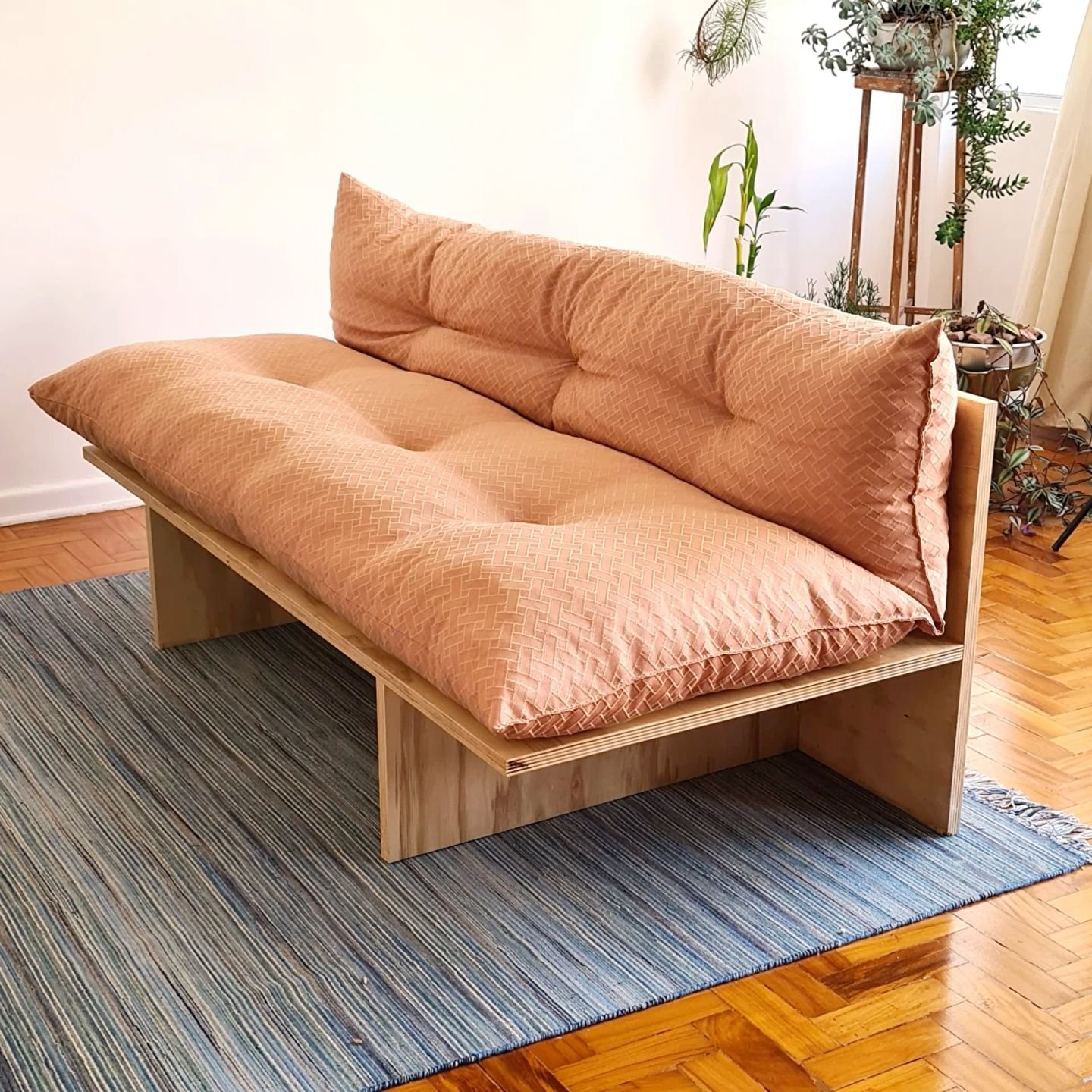
How to Style a Futon So It Looks Intentional, Not Temporary
Disclosure : This post may contain affiliate links or paid partnerships. I may earn compensation if you click a link or make a purchase, at no additional cost to you. See my disclosure for more info.
Here’s something worth knowing upfront: the living room you want is absolutely possible with the futon you have.
Not eventually. Not after some big furniture overhaul. Now.
The futon is not the obstacle. How it’s currently positioned, accessorized, and integrated into the room is. That’s a genuinely good-news situation, because positioning and accessories are things you can change this week.
Interior architects deal with every kind of furniture, every kind of budget, and every kind of room constraint. What they bring isn’t access to special stores or premium furniture — it’s a trained approach to the decisions that most people make by instinct and get partially wrong.
These twelve steps walk you through that approach, applied specifically to a futon in a living room setting. Each step is concrete. Each step is actionable. None of them require spending a lot of money.
Start wherever your room needs the most help.
1) Move the Futon Away From the Wall — Even a Little
It sounds almost too simple to matter. It isn’t.
When a futon is pushed against a wall, flat and wide, it stops looking like seating and starts looking like a sleep surface that wandered into the wrong room. The visual message is “temporary arrangement” rather than “considered design.”
Interior architects position seating to shape the room around it. Furniture doesn’t just occupy space — it defines it.
Move the futon three to five inches forward from the wall. The shadow that forms in the gap behind it adds visual depth and transforms the piece from something pushed aside to something deliberately placed.
If the futon has a visible frame, this distance matters even more. Give it room to exist as a design element, not something compressed into a corner where nobody can see it.
2) Invest in the Right Rug — and the Right Size
The single most common living room styling mistake is an undersized rug. Not slightly undersized. Noticeably undersized — the kind where the rug occupies a small patch of floor that only two legs of the futon are touching, if that.
A rug like that makes the futon look stranded. The fix is simple but requires commitment: the rug needs to be large enough for at least the front legs of the futon to sit on it, with the rug extending well past both sides and in front.
That extension creates a seating zone — a visible boundary that says “this is an organized area of the room, not random furniture placement.”
A jute rug is a beautiful neutral that works with almost any color palette. A flat-weave rug adds texture at a comfortable visual volume.
If you change nothing else, changing the rug makes an immediately visible difference. It’s that fundamental.
3) Use the Throw Blanket Correctly
A throw blanket can elevate a futon or undermine it depending entirely on how it’s used.
Spread flat across the seat cushions, edge to edge — the most common approach — it makes the futon look like a bed. That association is hard to shake once it’s established.
The technique that works: fold the throw into a long, narrow rectangle — about one-third the futon’s width. Drape it over a single armrest. Let it fall naturally to one side. Asymmetrical. Off-center.
Why asymmetry? Because a symmetrically styled room looks like it was arranged for a catalog shoot. An asymmetrically styled room looks like someone with good taste actually lives there. The asymmetry communicates ease and confidence.
Choose a throw with contrasting texture to the futon’s fabric. Smooth upholstery plus a chunky knit. Flat weave plus a linen throw. That textural contrast is quiet but powerful — it adds richness and dimension with a single accessory.
4) Build an Intentional Pillow Arrangement
Three to five pillows is the range. Odd numbers work better visually — they avoid the overly formal pairing that makes arrangements look staged rather than lived-in.
Layer by size: large pillows at the back, touching or near the armrests. Medium pillows overlapping them slightly in front. One small accent pillow off-center — not centered, and not at either far end.
Vary the surfaces: a velvet pillow next to a woven cover. A flat color beside a quiet pattern. The variety reads as curated rather than purchased together.
Here’s the step most people skip: add a lumbar pillow. One rectangular pillow among the squares disrupts the predictable grid and immediately signals that the arrangement was assembled by someone who thinks about these things. It’s a small move with a disproportionate effect.
5) Add a Side Table to Complete the Seating Area
A seating area without a side table nearby feels unresolved. It’s one of those things that registers without announcing itself — a sense that something is missing.
You don’t need to spend much. A round side table brings classic design contrast alongside the straight lines of a futon — curved forms naturally complement rectangular ones. A wooden stool achieves a very similar effect on a tighter budget.
Pay attention to the height: aim to match the armrest exactly. Level with the armrest. When the table height aligns with the arm, it reads as intentionally part of the seating arrangement. Any mismatch — taller or shorter — breaks that integration.
Keep the tabletop simple: one small lamp, one candle, one book or small decorative item. Three elements. Designers call this a vignette. Think of it as a composed mini-scene that gives the area life and purpose without adding clutter.
6) Layer Your Lighting
This is the step that makes the biggest difference and gets skipped most often.
Most homes rely on ceiling fixtures as their primary — and often only — light source. That even, shadowless overhead light is extremely good at making rooms look like rooms in a generic apartment complex and very bad at making rooms look like rooms someone designed with care.
Add a floor lamp near the futon. Use a warm bulb — 2700K is the industry-standard descriptor for that amber, inviting warmth that reads as “cozy,” “comfortable,” and “designed.”
Then add a second light source on the other side of the room — a table lamp on a surface, some warm ambient lighting at shelf level, anything that creates an additional point of warmth. The result is layered light: multiple sources at different heights and positions that create shadow, depth, and dimension.
Interior architects layer light in every single project. Once you see what it does to a room, you’ll understand why.
7) Give the Wall Behind the Futon a Purpose
The wall directly above and behind the futon is part of the composition whether you intend it to be or not. Left bare, it makes the whole seating arrangement feel like a draft — something in progress, not something complete.
One large piece of art hung centered above the futon, its midpoint at standing eye level, is the cleanest and most effective choice. Not high on the wall — at eye level when standing. Chronically too-high artwork is one of the most widespread styling errors in residential design.
Or a gallery wall: three to five pieces of varying sizes, grouped together, kept within the horizontal span of the futon below. Never wider than the furniture below it — that proportion boundary is important.
Or a large round mirror: it reflects light around the room, makes the space feel bigger, and provides strong visual presence without introducing any busy pattern or competing color.
Choose one approach and do it well. The temptation to combine all three leads to visual chaos rather than richness.
8) Make Sure the Room Flows
Before any styling decision, experienced designers ask: how do people move through this room?
A beautifully styled room that’s awkward to navigate will never feel right. Spatial comfort is a prerequisite for spatial beauty.
Ensure at least 18 inches of unobstructed space on the main path through the room. If the room is compact, try rotating the futon slightly off-axis — even a modest angle can open up the flow considerably and make the room feel more spacious than a parallel-to-wall arrangement allows.
When the room functions well, the styling has something solid to work with. Start here.
9) Bring In a Plant for Vertical Energy
A living room full of low, horizontal furniture — sofas, tables, rugs — can feel visually compressed without some vertical interest to draw the eye upward.
A tall plant placed near the futon solves this elegantly. A fiddle leaf fig, a monstera, a snake plant, or a dracaena beside the futon pulls the eye upward and introduces an organic, living vertical line that energizes the whole composition.
Place it on the emptier side of the futon — wherever the space feels less defined. That corner where the futon end meets the wall is often the perfect spot.
One plant. Not a collection — that tips into greenhouse territory. A single vertical element providing the needed contrast.
Low natural light? A quality faux plant delivers the same height, presence, and visual warmth. The visual impact is what matters.
10) Limit the Palette to Three Colors
Color is where many well-intentioned styling efforts quietly go wrong.
When the room has accumulated many different colors over time — each individually reasonable but collectively competing — the space feels visually unsettled. The eye scans without landing anywhere.
The approach that resolves this: three colors, clearly assigned to three roles.
The dominant color covers the most surface area — the futon upholstery and rug. The supporting color appears in pillows and the throw, reinforcing without competing. The accent color appears just once, in a single decorative item or piece of art.
Three colors. That’s the whole palette.
This level of color discipline makes everything in the room look more intentional and more cohesive — including pieces you already own and weren’t planning to change.
11) Position the Coffee Table at the Right Distance
Furniture spacing is one of those details that operates mostly below conscious awareness. Get it right and the room feels settled. Get it wrong and there’s a persistent sense that something’s off, even if nobody can identify what.
The target distance between the front edge of the futon seat and the near edge of the table in front of it: fourteen to eighteen inches. This range accommodates comfortable use and reads as organized rather than crowded or dispersed.
A coffee table proportioned to roughly two-thirds the futon’s length looks balanced and intentional. Shorter and it looks afterthought-sized. Longer and it takes over.
Compact room or frequent futon conversion? two small nesting tables are flexible and easy to move. A round ottoman with a tray is another excellent choice — it doubles as seating and moves aside easily when the futon needs to unfold.
12) Plan for Both Modes: Sofa and Bed
A futon is two pieces of furniture. Styling it for only one is designing for half the use case.
Before committing to a layout, check that the futon has enough clear floor space in front to extend fully. Identify which pieces need to move for the conversion and confirm they can be moved quickly — ideally in under a minute.
An attractive basket or bin placed within or near the seating area is the most practical detail you can add for this purpose. When the futon converts, pillows and the throw blanket go into the basket. The room stays organized. The transition takes moments rather than becoming a disruptive rearrangement.
A futon that handles both modes gracefully is a genuinely well-designed piece of furniture in your home. That’s the goal worth designing toward.
You Already Have What You Need
Take a breath, because here’s the honest takeaway:
There is nothing about a futon that prevents a living room from looking exactly the way you want it to look. Not the category, not the price point, not the form factor.
What makes the difference is applying these principles — proportion, layering, color discipline, intentional light, spatial flow — consistently and thoughtfully.
The gap between your current room and the room you’re picturing is not a furniture gap. It’s a method gap. And you now have the method.
Start with the one step that would make the most visible difference right now. Do that today. Then come back for the next one.
Your living room is about to become something you’re genuinely proud of.
The futon is going to be a big part of why.