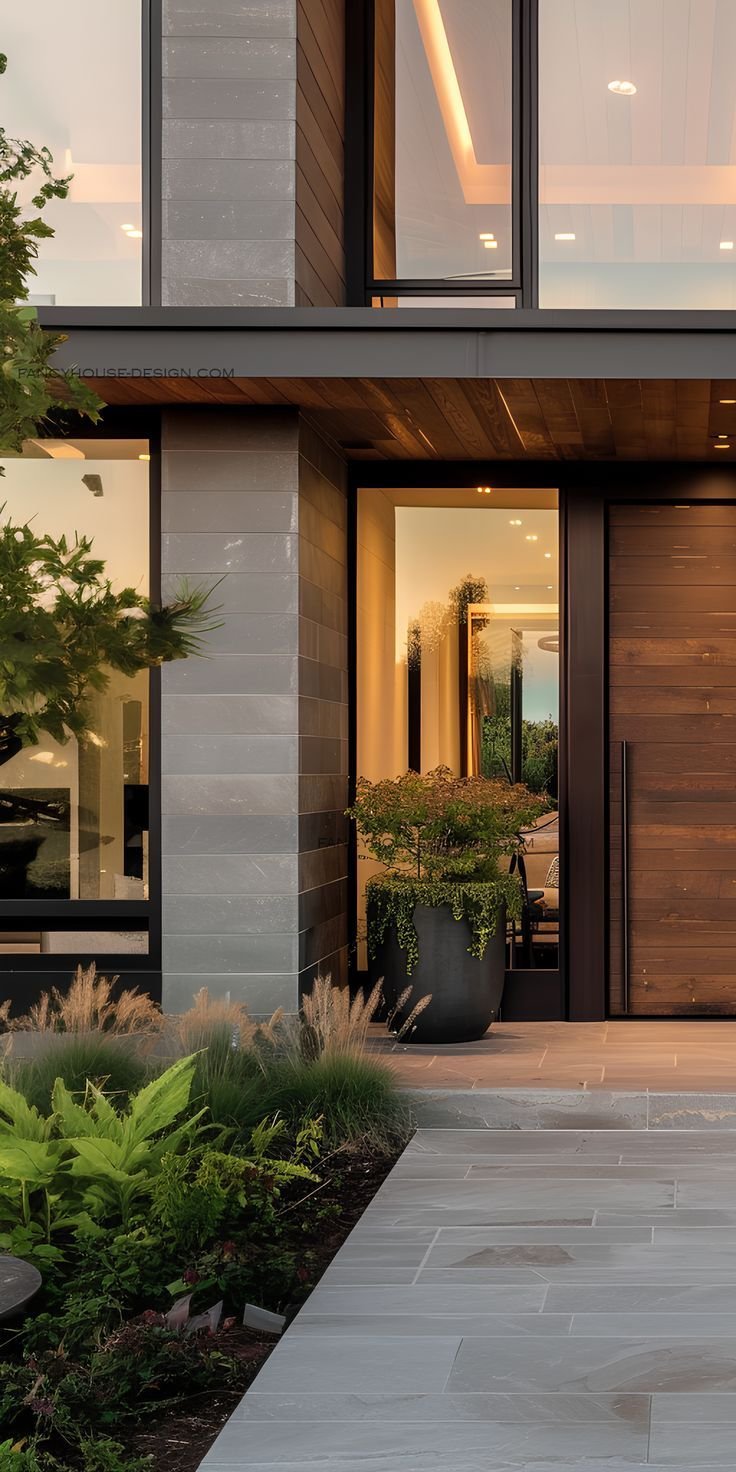
43 Front Door Refresh Ideas to Fall Back in Love With Your Home’s Entrance
Disclosure : This post may contain affiliate links or paid partnerships. I may earn compensation if you click a link or make a purchase, at no additional cost to you. See my disclosure for more info.
Somewhere along the way, most of us stopped seeing our front door.
We pass through it so often that it fades into the background — just another familiar part of the daily routine, not something that registers as a design choice or an opportunity for change.
But guests still see it. Neighbors still see it. You see it in that specific moment, once in a while, when you pull into the driveway and something makes you look up.
And when you do look up — really look — what do you see?
If the answer is anything less than “something I’m proud of,” this list is for you.
Here are 43 ways to bring your home’s entrance back to life this season.
Color: Giving Your Entry Permission to Be Beautiful
Paint is the most democratic upgrade in design. It costs almost nothing relative to its impact, and it’s completely reversible if you change your mind.
These six colors represent the best of what’s working on front doors right now — bold enough to matter, considered enough to last.
1. Matte black paired with warm gold hardware. The combination that keeps appearing in design publications, and for good reason. There is something about the pairing of flat black and warm brass that is almost universally appealing.
2. Terracotta. Rich, earthy, and warmer than you might expect. On a pale exterior, terracotta creates an entry that feels both contemporary and welcoming.
3. Forest green. One of those colors that feels right in the natural world and translates beautifully to architectural surfaces. Against timber, stone, or brick cladding, it’s particularly at home.
4. Deep navy. Serious without being cold. Classic without being tired. Navy blue has been making things look better for a very long time and shows no signs of stopping.
5. Misty sage. The calmest option on this list. Sage sits in a gentle register that feels fresh year-round and suits a wide range of architectural styles.
6. Charcoal grey. The choice for those who want the weight of black with a slightly softer result. Charcoal reads as thoughtful rather than stark.
Before committing to a full door paint, apply your shortlisted color to a large area of the actual door surface and live with it for a day. Light shifts dramatically between morning and afternoon, and what you see in the tin is never quite what you get in situ.
Pivot Doors: The Entry That Feels Like a Luxury Hotel
You know the feeling when you arrive somewhere genuinely beautiful and there’s a moment of quiet appreciation as the door opens?
Pivot doors create that feeling. Not through decoration or ornamentation. Through movement, proportion, and balance.
They’re a meaningful investment. But they return something meaningful in kind.
7. Grand timber pivot door. The scale is part of the design. Tall, solid, and moving with a deliberate grace that standard doors simply cannot replicate.
8. Steel-frame glass pivot. For homes that favor the industrial aesthetic, this combines maximum light with the distinctive pivot movement in a single, resolved package.
9. Aluminum pivot with etched glass sidelights. A refined, privacy-conscious pivot option. The etched glass lets light enter while keeping the interior appropriately private.
Pivot doors are not weekend DIY projects. They require specialist hardware, structural preparation, and professional installation. But the impact — on how your home looks from the street, and more importantly on how it feels to walk into every day — tends to justify the investment for people who make it.
More Light, More Welcome: Glass Door Ideas
The foyer is the first interior space your guests experience. A dark, closed-in entry is a poor start to an otherwise beautiful home.
Glass is the solution — and these five options offer a range of approaches from subtle to transformative.
10. Near-full glazed door. The most generous light option. The interior becomes connected to the exterior in a way that feels genuinely open and inviting.
11. Obscure glass panel door. For entries that need both light and privacy. The quality of obscure glass has improved enormously — textured, frosted, and sandblasted options now offer both function and genuine beauty.
12. Adding sidelights beside the existing door. The most accessible intervention on this list: no door replacement required. Narrow glass panels on either side of your current door transform the light quality of the entry immediately.
13. Transom window above the frame. Light arriving from above is particularly warm and even. A generous transom is one of the most enduring details in residential architecture for this reason.
14. Reeded glass panel insert. The glass treatment that has been appearing on everything from shower screens to cabinet doors to front entrances. It’s everywhere right now because it genuinely works.
A note on privacy: check your proposed glass treatment from outside at night with your interior lights on. Glass that provides adequate privacy in daylight can become revealing after dark. Design for both conditions, not just the one you test during the selection process.
Natural Timber: Beauty That Deepens Over Time
There is a quality to a well-made timber door that other materials are still working to replicate. The depth of grain. The warmth of tone. The way the surface responds to light differently at different angles.
Contemporary timber doors have shed the heavy stains and ornate panel profiles of previous decades. What remains is something genuinely beautiful.
15. White oak with a clean vertical face. Pale, elegant, and architecturally restrained. White oak’s medullary rays give it a subtle patterning that becomes more beautiful as the door ages.
16. American walnut slab. The darkest and most dramatic of the common door timbers. Walnut’s grain has a complexity that creates a surface you can look at differently every time.
17. Teak with a banded surface pattern. Warm in tone, textured in surface, and inherently resistant to the conditions exterior doors must endure. A beautiful and practical choice.
18. Blonde maple in a Scandinavian profile. Light, fine, and minimal. The Scandinavian design tradition has built an entire aesthetic around the honest expression of pale timbers like maple.
19. Reclaimed hardwood in a contemporary frame. The soul of aged timber — its history, its character, its irreproducible surface — housed in a form that is entirely of the present.
Timber requires care, and different species require different levels of it. Have an honest conversation with your supplier about what your chosen timber will need, and match that to your lifestyle. The door that looks magnificent but is neglected will look worse than a lower-grade door that is properly maintained.
The Details That Change How Your Door Is Seen
Hardware is the detail that either completes an entry or betrays it.
The right lever, the right pull, the right house numbers — these things are noticed, even when people don’t consciously register them. They create an impression of a home that has been looked after, thought about, cared for.
20. A simple, clean lever handle in matte black. If you change nothing else, change this. It is the most immediate and affordable upgrade available for most front doors.
21. A long vertical pull bar in warm brass. The piece that makes people say “that’s a great door” when they’re actually noticing the hardware. Scale is the key — go longer than feels necessary.
22. A keypad deadbolt system. Modern models have a low enough profile to sit comfortably on contemporary doors. No keys to lose. Clean aesthetic. Works reliably.
23. Generously proportioned address numbers. Large enough to be read easily from the street. In a typeface that complements the architecture. Most homes have numbers that are too small — be the exception.
24. A recessed letter aperture. If your design sensibility runs European or minimalist, a built-in letter slot is the detail that says the entry has been properly resolved.
Complete the picture with matching hinges. Consistent hardware finishes across every visible element — lever, knocker, hinges — create a cohesion that elevates the whole.
Hardware is the entry-level investment with the highest visual return. If budget is a constraint, this is always where to start. It will make your current door look better — and it will tell you whether you need a new door at all.
Double Doors: Generosity in Architectural Form
There is an inherent generosity in double doors. They make space for welcome. They suggest that what’s inside is worth the entrance it receives.
25. Glazed steel French entry doors. Maximum light, strong graphic quality, and a look that enriches both the interior and the street-facing facade.
26. Wide timber double pivot doors. For the home with the proportions to carry this — and the budget to invest in it — this is one of the finest residential entry configurations available.
27. Arched pair with textured glass inserts. The arch introduces a softness that balances the scale of the double-leaf format. Fluted glass inserts add contemporary texture to a classically shaped opening.
28. Unequal double-leaf doors. The asymmetry creates visual interest without complication. Use the wider leaf daily; open both when the occasion calls for it.
For retrofit installation: widening a door opening is structural work. The lintel above must be specified to carry the new load. Engage a structural engineer before specifying.
Minimal Doors: The Entry That Earns Its Quiet
There is a kind of confidence in restraint. The minimalist entry doesn’t ask to be noticed. It is simply resolved — and that resolution is its beauty.
29. Perfectly flush door. Level with the surrounding facade. No projecting frame, no architrave. A door-shaped void in the wall that opens precisely when approached. Extraordinary when executed correctly.
30. Handleless push-plate entry. The removal of all conventional hardware creates a door surface that is completely uninterrupted. The act of opening it is simple, direct, and satisfying.
31. Door matched to facade finish. The same color, the same texture. The door becomes part of the wall, and the entry reveals itself as a discovery. For homes with strong architectural language, this is exceptionally effective.
32. Solid door with a single narrow window strip. One considered proportion of glass in an otherwise complete solid door surface. The balance of void to solid is the entire design decision.
33. Raw-texture panel door. Concrete, plaster, board-form — for homes with an industrial or materially honest character, a door surface that continues that language is the most architecturally coherent choice.
The minimalist approach rewards precision and punishes imprecision in equal measure. In the right hands, in the right context, it is among the most beautiful approaches available.
Mid-Century Modern: Design That Was Right Then and Is Right Now
Some design languages are truly timeless, not because they become classic, but because their underlying principles are right. Mid-century modernism falls into this category.
Its best examples were always about function, honesty, and visual clarity. Those values don’t date.
34. Geometric inlaid door panel. The era’s love of bold graphic geometry expressed in door design. Starbursts, elongated diamonds, stacked rectangles — these motifs retain their visual energy.
35. A saturated paint color with period hardware. The era was not afraid of yellow, orange, or teal. A bold door color paired with an authentic sunburst or ring knocker is a joyful and confident choice.
36. V-groove plank door in the classic teal. The combination most associated with mid-century residential design. With the right house numbers and simple round hardware, it is both historically faithful and completely current.
37. Square-light panel door. Three square windows arranged vertically in a flat panel. Symmetrical and beautifully proportioned. A design so resolved it has required no revision in sixty years.
Homes of this era were conceived as unified compositions. The most successful contemporary updates work within the established architectural vocabulary rather than importing one from a different era.
The Entry Surround: Setting the Scene
A beautiful door in a neglected surround is like a great painting in a damaged frame. The context shapes the experience.
These six treatments address the entry as a complete composition rather than just a door.
38. Panel cladding extended around the door frame. Creating a distinct entry zone within the facade with board-and-batten or similar paneling gives the door a clear compositional setting.
39. Natural stone or tile cladding around the entry. A change of material creates depth, texture, and a sense of considered design that painted surfaces alone cannot achieve.
40. Contrasting trim and architrave. On a light-colored facade, a dark door surround and trim creates the clearest possible focal point at the entry. Simple, effective, and immediate.
41. Designed entry planting flanking the door. Greenery integrated into the entry composition rather than placed as an afterthought. The difference between the two is visible immediately.
42. Recessed entry threshold with considered lighting. Setting the door back from the facade plane creates a transitional space. A well-chosen hanging lantern or architectural downlight transforms this space after dark.
43. A properly scaled entrance mat. The final word. Large, quality, appropriately proportioned. The detail that tells anyone approaching that the entry has been thought about all the way to the threshold.
Falling Back in Love With Coming Home
The goal of all of this — the color research, the hardware comparisons, the inspiration gathering — is simple.
It’s to walk through your front door and feel, each time, that slight warm satisfaction of being somewhere you’ve genuinely made your own.
That feeling is achievable. It starts with identifying what’s not working about your current entry, and making one good change. Then another. Building, over time, something you’re genuinely proud of.
One idea. This season. Done well.
That’s where it starts.