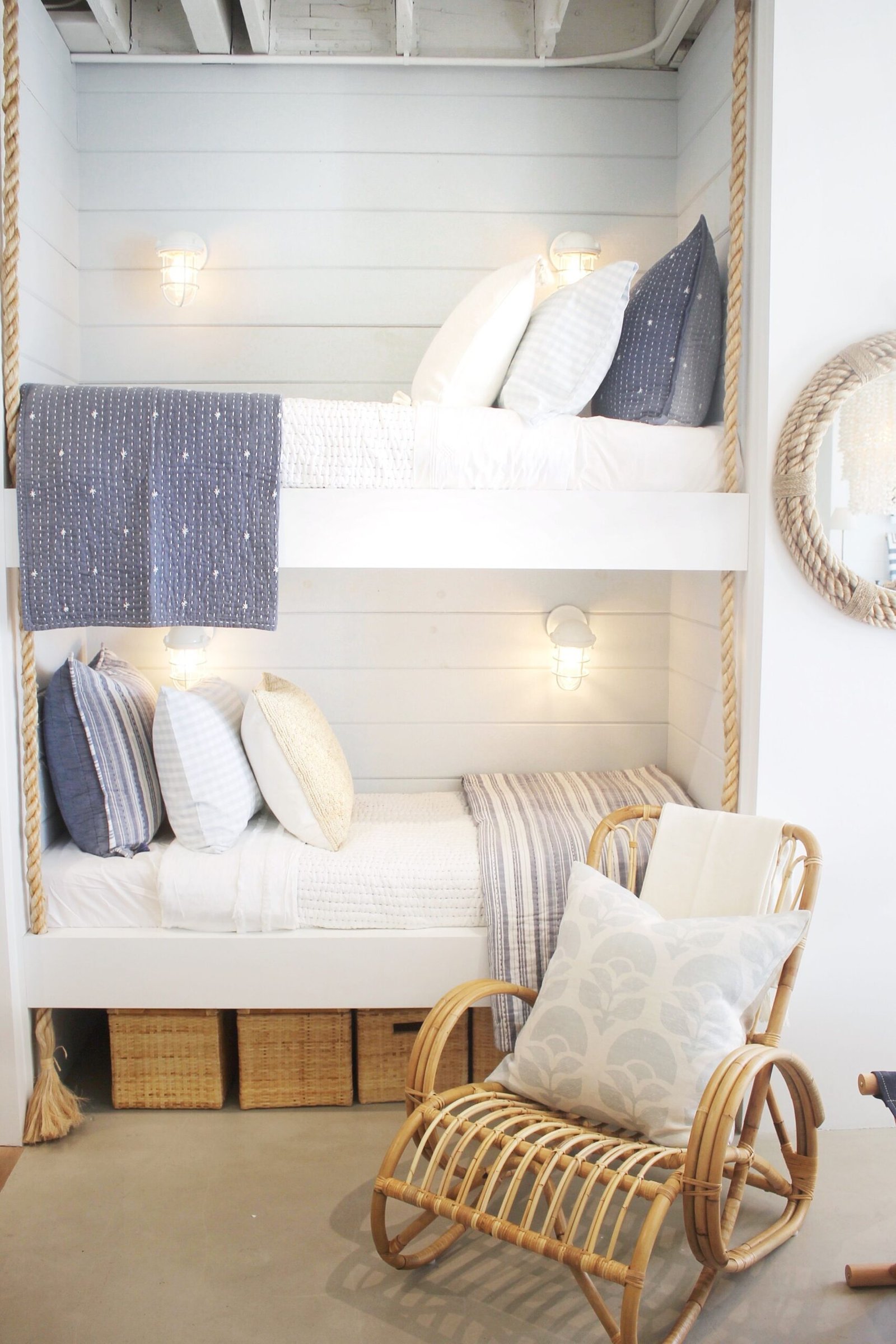
Make Every Inch Count: 17 Bunk Bed Ideas for Small Spaces
Disclosure : This post may contain affiliate links or paid partnerships. I may earn compensation if you click a link or make a purchase, at no additional cost to you. See my disclosure for more info.
You’ve got limited square footage and high expectations. That combination is more manageable than it sounds.
Here’s what experienced small-space designers know that most people don’t: the limiting factor is almost never space. It’s the absence of a good plan for the space you already have.
Bunk beds are one of the best plans available. They stack sleeping vertically and free up the floor for everything else. But only if the rest of the setup supports that logic.
Most bunk bed rooms don’t. They get the beds right and leave everything else unconsidered. The result is a room that functions at maybe sixty percent of its potential.
These 17 ideas close that gap. They’re organized around the real problems — storage, light, privacy, aesthetics — and they work at a range of budgets and room sizes.
Starting Point: The Bunk Bed Sets the Tone
Everything in a small room exists in relationship to its largest piece of furniture.
In a bunk bed room, that’s the bunk bed. It dominates the visual space. When it looks good, the room looks good. When it looks like it was purchased at minimum effort and installed without further thought, the room communicates exactly that.
Design from the bunk bed outward. Not around it.
The 17 Ideas
1. Personal Lighting for Every Sleeper
A wall-mounted reading light beside each bunk is one of the highest-value investments you can make in a shared sleeping room.
It resolves the light conflict immediately. Each person controls their own environment. No negotiation, no compromise, no resentment.
It also makes each bunk feel like a real place — defined, lit, intentional. That changes how the whole room reads.
2. Curtains to Create Personal Space at Zero Cost
Two tension rods and two sets of panel curtains are among the cheapest and most impactful upgrades in a bunk bed room.
Each bunk gets an enclosure. The room goes from feeling like a dormitory to feeling like a set of individual sleeping compartments.
For children especially, the sense of having their own contained space pays dividends in how they treat the room and how much peace exists within it.
3. A Bold Wall Color Behind the Bunk
Pick up a quart of paint in a deep, interesting color and apply it to the bunk wall.
This is the most efficient design investment on this list. A can of paint, an afternoon, and the room has a dramatically different quality. The bunk bed looks intentional in front of a strong color. It looks placed rather than parked.
Deep colors also make small rooms feel more intimate rather than cramped. The walls come forward, and the room feels like it was designed for comfortable occupancy.
4. Storage Stairs That Double Your Capacity
If you’re choosing a new bunk bed or replacing an existing ladder, stair units with integrated drawers are worth the additional cost.
The storage they provide would otherwise require a dresser or chest of drawers — a piece of furniture that would consume floor area and compete with the open space you’re trying to protect.
They also provide safer top-bunk access, particularly for younger children. The functional and safety case is strong; the aesthetic case is equally strong.
5. Coordinated Bedding That Unifies the Frame
Take fifteen minutes to choose bunk bedding as a system.
Pick pieces for both bunks at the same time, from the same color family. They can differ in pattern; they should share a palette.
The effect is disproportionate to the effort. A coordinated bunk bed looks like designed furniture. An uncoordinated one looks like two people made independent decisions about their corner of the room. In a small shared space, that distinction matters enormously.
6. Under-Bunk Storage You’re Currently Wasting
Check the clearance under the lower bunk. If there’s enough height, a rolling storage unit or trundle bed fits there.
Off-season clothes. Extra bedding. Sports equipment. Anything that needs a home but doesn’t need to be visible goes here.
This is storage you’re already paying for in the room’s footprint. It costs nothing extra to use it.
7. Name Signs That Solve Boundary Disputes
Put a personalized name display above each bunk in a shared kids’ room.
Territory is a major source of friction in shared rooms. Named spaces reduce that friction measurably. Each child has a clearly marked domain. The room has told them so. The negotiating cools considerably.
These are typically inexpensive to purchase or easy to make. The return on investment in household peace is significant.
8. Wall Shelves That Replace Nightstands
A slim floating shelf at bunk height is cheaper than a nightstand, takes no floor space, and holds everything a nightstand would.
Book. Water. A small lamp or framed photo. The basics, on the wall, within arm’s reach. The floor below remains clear.
In a tight room, the difference between an object on the floor and the same object on a wall shelf can be surprisingly significant to how spacious the room feels.
9. The L-Layout Trick for Odd-Shaped Rooms
If your room has an underused corner, an L-configured bunk arrangement might be the solution you haven’t considered.
The lower bunk runs perpendicular to the upper, creating a sheltered floor nook under the elevated portion. Desk, storage unit, reading chair — that nook accommodates whatever the room needs most.
It also visually breaks up the stacked uniformity of a traditional bunk, making the room feel less like a sleeping capsule and more like an actual room.
10. Peel-and-Stick Wallpaper Inside the Bunks
A few panels of removable wallpaper applied inside each bunk costs relatively little and produces an outsized visual result.
Each sleeping space becomes personal. You can use a different pattern in each bunk to reflect the individual using it. The wallpaper is fully reversible, so it can change as preferences change.
For renters or anyone who can’t permanently alter the walls, the contained application inside a bunk frame is particularly practical.
11. LED Tape Under the Top Bunk
Warm LED strip lights applied to the underside of the upper bunk are widely available, battery-operated, and require no wiring.
The result is ambient lighting for the lower bunk that functions as a night light, a reading supplement, and an aesthetic upgrade simultaneously.
For the price and installation time, few changes produce a more immediate visual improvement.
12. A Slide for Children With Good Floor Clearance
For younger children, a slide exit off the top bunk generates enthusiasm for a room that might otherwise be a source of bedtime resistance.
Confirm available floor space before purchasing. Most slides are designed for easy attachment and removal. The practical and motivational payoff tends to be high.
13. A Desk Zone Under a Raised Bunk
A loft-height bunk with a desk lamp, corkboard, and workspace below is one of the most effective small-room configurations available.
It fits a complete bedroom and a complete home office into the same footprint. For students, remote workers, or anyone in a studio situation, this approach can be transformative.
14. Woven Storage on the Bunk Side Rail
A hanging basket or macramé organizer clipped to the bunk rail catches small items without requiring a surface to set them on.
It’s practical. It introduces texture. And it makes the bunk look like someone put thought into it — which is exactly the signal you want a room to send.
15. Mixed Finishes for a Less Generic Look
If the budget allows for a new bunk bed, choose one with contrasting finishes on the two levels. Or paint the lower bunk a different color from the upper one.
The two-tone approach adds visual complexity that a single-finish bunk simply doesn’t have. It also makes the room look less like a catalog page and more like something that was put together with taste.
16. A Canopy to Make the Top Bunk Special
Hang a lightweight fabric canopy from a ceiling hook above the top bunk.
It creates enclosure without structure, privacy without walls, and a sense of personal space that makes the top bunk feel like the best seat in the room.
Sheer fabrics are the most versatile choice. They soften the look without blocking light.
17. A Tight Color Palette That Ties Everything Together
Before finalizing any purchases, decide on three colors and commit to them.
Apply them to the frame, the bedding, the wall treatment, the shelves, and the accessories. Not some of them — all of them.
A consistent palette is the single design move that has the greatest effect on whether a room feels pulled together or not. It costs nothing to do. It makes everything you’ve already purchased look better. And in a small room, its impact on perceived quality and spaciousness is significant.
The Mistake That Costs You Everything You Gained
Here it is, plainly stated.
You install the bunk bed to recover floor space. The floor clears up. Then, because there’s now floor available, you start filling it: a dresser here, a bookcase there, a bean bag in the corner that no one sits in but no one removes.
The floor disappears. The room is just as crowded as before. The bunk bed didn’t help — not because it can’t, but because its benefits were immediately traded away.
Protect the cleared floor. Route storage through the bunk’s integrated solutions. Every item you prevent from occupying the floor is a visible expansion of the room’s perceived size.
The Room You Already Have Is Enough
Small rooms that work well aren’t small rooms that got bigger.
They’re small rooms where every decision was made with the room’s constraints in mind. Where nothing was left in by default. Where the furniture does more than one job and the floor stays as clear as possible.
That’s the standard you’re working toward. And it’s entirely within reach — with the room you have, the budget you have, and the 17 ideas you’ve just read through.
Choose the ones that address your most pressing problems. Start implementing them.
The room improves with each decision. That’s how this works.