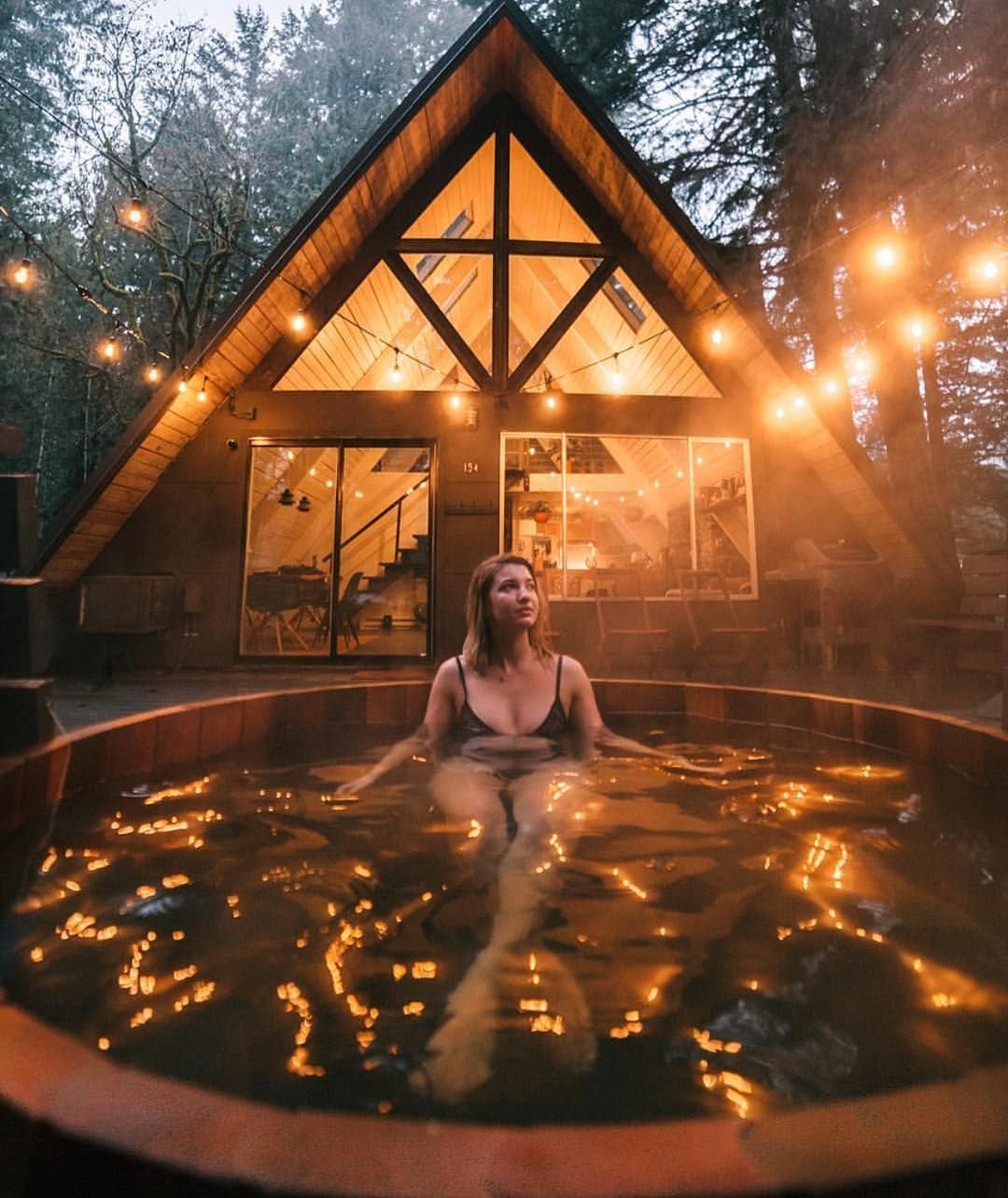
20 Outdoor Jacuzzi Ideas for Anyone Starting Their Backyard From Scratch
Disclosure : This post may contain affiliate links or paid partnerships. I may earn compensation if you click a link or make a purchase, at no additional cost to you. See my disclosure for more info.
You haven’t built this yet.
Maybe your backyard is empty. Maybe it’s a mess. Maybe it’s a hand-me-down from a previous owner — landscaping choices that have nothing to do with you, a patio that faces the wrong direction, a lawn you mow but never actually use.
Whatever the starting point, you’re beginning. And beginning is good.
Because the homeowners with the most beautiful backyards — the ones with the warm glow of string lights overhead and the sound of jets and a setup that makes guests stop talking mid-sentence when they first see it — almost all started from scratch too. They just started.
You’re about to have a very clear picture of what you’re building toward.
These 20 outdoor jacuzzi ideas cover every starting point, budget, and skill level. Some require contractors. Some don’t. Some are multi-year projects. Some are weekend ones.
Find the one that matches where you are. Then start from there.
20 Jacuzzi Ideas for Every Starting Point
1. The Sunken Built-In: Your First Flagship Project
If you’re starting from scratch with a blank backyard, a flush-set sunken hot tub is the flagship project that defines the entire space around it. Build this first and everything else follows from it.
The design principle is simple: lower the tub until the rim is level with the surrounding deck surface. The visual result is a backyard that looks custom-built rather than assembled from parts — exactly the impression you want to make from day one.
One thing to build in from the very start: access panels on at least one side of the installation. Future-you will be grateful when a pump needs replacing and you can reach it without a demolition project.
2. Start With a Pergola: The Best First Structure
If you’re building your backyard from nothing and aren’t sure where to start, a pergola over the hot tub area is the single best first structure for most outdoor spaces.
It establishes the focal point of the yard. It gives you a frame to hang drapes and lights from. And it provides the overhead enclosure that makes the space feel like a room rather than an outdoor area.
Cedar or redwood pergolas are forgiving for first-time builders: durable, low-maintenance, and beautiful from the day they go up. They only get better with time.
3. Stone Surround: Your Highest-Impact First Material Choice
When you’re building a hot tub setup from scratch, the single material choice with the highest impact on how the finished space looks is the surround material.
Natural stone — rough flagstone, slate, or travertine — is the right answer for most homeowners. It’s durable, it ages beautifully, and it instantly makes the space look like a professional designed it. Nothing else at a comparable cost has the same visual impact.
Use irregular edge cuts rather than uniform pieces. The organic quality of irregular stone reads as intentional; uniform tiles read as standard.
4. The Simplest Possible Starting Point: Japanese-Style
If you want to start immediately without extensive planning, construction, or a large budget, a Japanese soaking garden is your entry point.
Level a gravel area. Set a cedar soaking tub on it. Install bamboo fencing on two sides for privacy. Choose one plant. Stop there.
You can have this setup ready in a weekend. It costs less than almost any other design on this list. And done correctly, it looks more intentional than many setups that cost ten times as much. Simplicity, executed with care, is always sophisticated.
5. Rooftop or Elevated Deck: Think Big From the Start
If you’re designing a new backyard from scratch, consider vertical thinking before you default to ground-level layouts.
An elevated hot tub — on a second-story deck or a purpose-built raised platform — creates a qualitatively different outdoor experience. You’re not in the yard. You’re above it. The views, the sky, the sense of separation from ground-level life — none of this is achievable at grade.
First and most important: have a structural engineer confirm load capacity before designing anything else. A full hot tub with occupants can weigh more than 3,500 pounds. This is not an estimate — it requires professional confirmation.
6. Hillside Integration: Let the Land Do the Work
If your blank-slate backyard has a slope, that slope is your biggest design asset. Work with it rather than fighting it.
Carve the hot tub into the grade. Build retaining walls in stone or timber on the uphill sides. Plant native species on the slope above. Let the landscape become the design.
First-time builders often underestimate how much visual work the landscape can do on its own. A well-integrated hillside hot tub looks like it cost twice what it did because the land itself is providing half the design.
7. Fire Pit First, Hot Tub Second (or Both at Once)
If you’re building an outdoor entertainment space from scratch, plan the fire pit and the hot tub together rather than adding one later.
The relationship between them — eight to ten feet apart, angled toward each other, with a clear line of sight between them — is what makes the pairing work. Retrofitting the spacing after one is installed almost always results in a compromise.
A gas fire pit is the easier starting point: no wood storage, no ash disposal, instant ignition. You can always add a wood-burning pit later. Start with what’s most convenient to use consistently.
8. Infinity Edge: Plan for This From the Beginning
An infinity-edge hot tub is among the most difficult to retrofit after other construction is complete. If this is a design you want, it must be planned into the project from day one.
The catch basin, the circulation system, the finished edge — all of these require specific planning decisions that affect everything around the tub. Start here if you have a view worth honoring and the budget to do it right.
For first-time builders: if you’re not sure whether you want this, leave the option open in your foundation design. Converting to a standard installation later is easy. Converting to infinity-edge later is very expensive.
9. Start Green: Living Privacy Screen From Day One
If you’re building a new outdoor space from scratch, plant your privacy screen on day one. vertical garden panels installed when you break ground will be fully established and densely planted by the time your first outdoor season is complete.
Starting with a living screen rather than a fence means your privacy improves every year rather than staying static — and the acoustic absorption and visual softness of a planted screen are qualities no fence can replicate.
Plant early. The investment in time is the most valuable one you’ll make in this project.
10. Swim Spa: The Right Choice When Space Is Limited
If you’re starting from a small or awkwardly shaped backyard and don’t want to spend the entire space on a single use, a swim spa solves the problem efficiently.
One unit occupies the space of a large hot tub and provides both a swim lane and a soaking bay. You get two very different outdoor wellness experiences in a footprint that a swimming pool would fill twenty times over.
For first-time backyard builders in limited spaces, this is often the most honest and practical recommendation on this list.
11. Tropical Theme: Commit or Don’t
A tropical theme is a design commitment, not a decoration scheme. If you want to build this, decide from the beginning and execute it fully. Tiki torches, lava rock, cold-hardy palms, thatched canopy — the whole thing, from the start.
First-time builders sometimes try a half-committed version — one or two tropical elements added to an otherwise neutral space. It never works. The theme requires full commitment to read as intentional rather than accidental.
Add an outdoor shower with a rain-head from day one. The ritual of rinsing before and after soaking improves water chemistry, extends the life of your filtration equipment, and genuinely makes the experience better.
12. Modern Clean-Line: A Great First Architectural Statement
If you’re starting from a blank yard and want a design that will feel timeless and never look dated, poured concrete with Color-changing LED lights under the rim is one of the safest choices available.
Clean lines don’t follow trends. The architectural vocabulary of this setup — horizontal surfaces, recessed light, dark water — looks as current now as it did twenty years ago and will look just as current twenty years from now.
For a first-time outdoor builder who wants to make one strong statement and have it age well, this is your design.
13. Planted Clearing: Start With Structure, Add Plants
When building a forest clearing from scratch, the sequence matters: install the hot tub and its foundation first, then plant around it rather than the reverse.
Plant the tall ornamental grasses, arborvitae, and specimen trees around the perimeter in the first season. They’ll establish their root systems while you’re using the tub, and within two to three seasons the enclosure you imagined will actually exist.
Patience is the only skill this design requires. The planting does its own work over time.
14. Tiered Deck: Plan the Whole Thing, Build in Phases
A multi-level deck is a project you can build in stages if budget requires it — but you should design all three levels from the start, even if you only build one in year one.
Put the hot tub on the lowest level in the first build. The middle tier with seating and the upper dining level can follow in subsequent seasons. Designing the whole structure from day one ensures each phase connects correctly to the next rather than requiring awkward retrofitting.
15. Courtyard Discovery: Check Your Architecture First
Before you plan any outdoor hot tub installation, walk the perimeter of your house and look for courtyard geometry — any U- or L-shaped configuration that creates a partially enclosed outdoor space.
If you find it, start there. The natural privacy and wind protection of the existing walls are worth more than anything you can build or install. Add oversized planters at the corners, outdoor curtains on any open side, and candle lanterns for evening light, and you have a soaking space that most homeowners couldn’t replicate at any budget.
This is the most underused backyard configuration in residential architecture.
16. Bohemian Style: The Most Forgiving Starting Point
For first-time outdoor builders who aren’t sure of their aesthetic yet, bohemian is the most forgiving design approach available.
You start with a few things — Macramé wall hangings on the fence, a wooden bench nearby, outdoor rugs on the deck — and add to it over time. Each addition improves rather than complicates the space. The aesthetic is designed to accumulate rather than arrive complete.
The only rule: every material must be outdoor-rated. Sealed wood, UV-stable textiles, mold-resistant fabrics. The aesthetic is layered, not neglected.
17. Gazebo: Build This First If You Have the Budget
If you have the budget and you’re starting from scratch, a hardtop gazebo is the first structure to build — before the deck, before the landscaping, before anything else.
Install it first. Then design the deck and hot tub installation within and around it. Every subsequent decision is made in the context of a protected, year-round outdoor room rather than an exposed yard that you’re hoping to protect later.
Starting with the shelter and working outward is the design sequence that produces the most coherent final result.
18. Pool Spillover: Only If the Pool Comes First
The pool spillover spa is the one design on this list where sequencing is non-negotiable: the pool must come first.
If you’re designing both from scratch, design them together and build them together. A pool contractor who knows from the beginning that a spillover spa is part of the plan will design the plumbing, the basin, and the pump system correctly from the start — rather than retrofitting it later at significant additional cost.
Plan it together. Build it together. The result will be a unified system rather than two things bolted to each other.
19. Gravel-Base Freestanding: The Immediate First Step
If you want to start today rather than after a construction project, this is your design.
Level a gravel pad. This can be done in an afternoon. Set a quality freestanding jacuzzi on it. Mount a towel hook on the nearest fence post. Start using it immediately.
You can always build around it later — a deck, a pergola, more sophisticated landscaping. But the tub is in, the water is heated, and you’re soaking this week instead of next quarter.
A simple setup you actually use beats an elaborate one you’re still planning every time.
20. Smart From Day One: App-Control Is Worth It
If you’re building your first hot tub installation, choose an app-connected model from the start rather than upgrading to one later. The transition cost is real and the inconvenience is unnecessary.
The difference between managing a hot tub manually — checking temperature, adjusting filtration, manually setting lights — and managing one from your phone is the difference between a hot tub you use three times a week and one you use once. That frequency gap is where all the value lives.
Start smart. You’ll never go back to manual management once you’ve experienced the alternative.
Four Things to Get Right Before You Build Anything
Whether this is your first outdoor project or your fifth, these four planning requirements apply to every outdoor jacuzzi installation. Getting them wrong is expensive. Getting them right is straightforward:
Drainage. Every surface around the hot tub must slope toward a drain or a permeable area. Standing water creates mold, algae, and slip hazards. Design drainage into the plan before a single piece of material is purchased.
Equipment access. Every built-in hot tub installation needs access panels on at least one side for pump, heater, and filter access. This is not optional and it is not something to add later. Plan it in from the start.
Electrical service. Hot tubs require dedicated 220–240V GFCI-protected circuits installed by a licensed electrician with specific hot tub experience. This is not a general electrician job. Find someone who has done hot tub wiring before.
Foundation. A loaded hot tub can weigh between 3,000 and 4,500 pounds. Grass will compress. Unstabilized soil will settle unevenly. You need reinforced concrete, properly compacted gravel rated for the load, or an engineered deck structure. Have an engineer confirm before you pour.
Get these four right and you’ve done the hard work. Everything built on top of a correct foundation stays beautiful and functional for years.
The First Step Is a Decision, Not a Contractor
You came in with a blank slate or something close to it. You’re leaving with twenty clear pictures of what that blank slate could become.
You don’t need to build all twenty. You don’t need to start big. You need to start — with the one that made you stop and think, “That one. That’s what I want.”
The simplest possible starting point is still a start. The gravel pad and freestanding tub is still a backyard that functions, that you use, that improves your evenings immediately.
Start there if that’s where you are. Build from there when you’re ready.
Your backyard is waiting for the first decision. Make it today.